
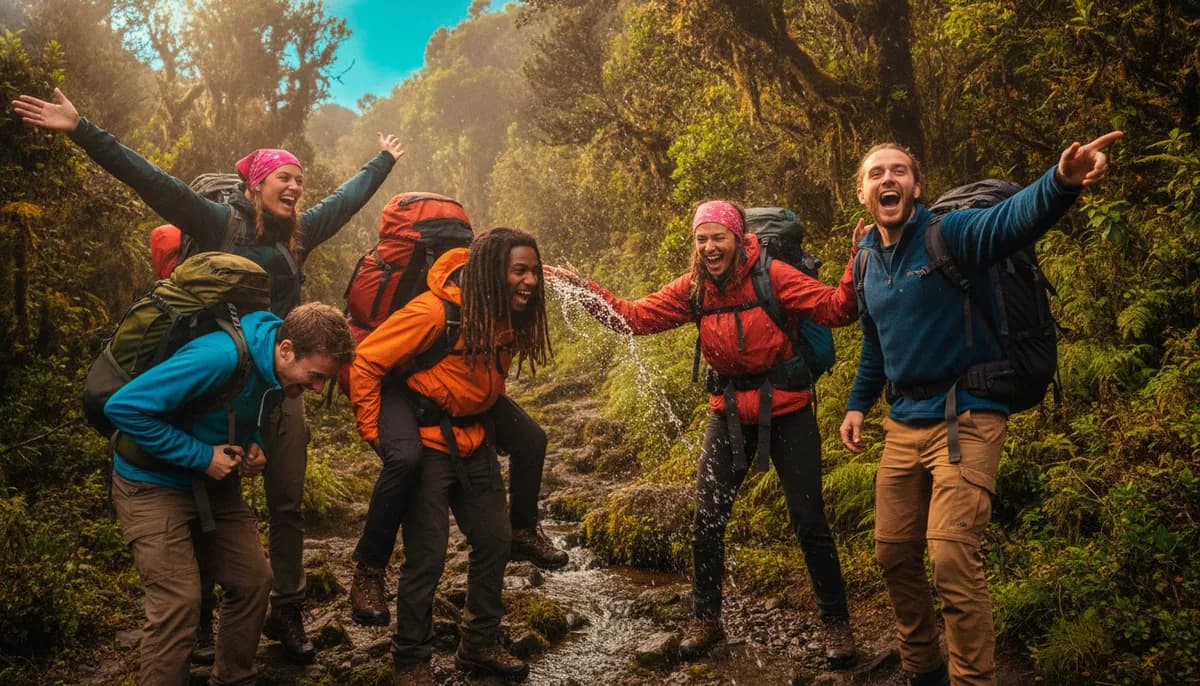
Self-Launched Tanzania: Kilimanjaro Lemosho Route & Serengeti Safari
16 days · Tanzania
G Adventures charges £5,760
No-markup version: ~£2,545 per person
Estimate only, not a guaranteed price. Always verify costs independently before booking.
A self-launched version of G Adventures' 16-day Kilimanjaro (Lemosho Route) and northern Tanzania safari circuit. You book a licensed local Kilimanjaro operator for the 8-day Lemosho trek (the permitted route, guides, porters, cooks and park fees are mandatory on Kili — you cannot climb independently, but you can choose a smaller local outfitter at a much lower rate), then build the safari section yourself using public buses, shared shuttles, and a locally-booked 4x4 safari out of Arusha. All costs are approximate backpacker/budget-traveller estimates in GBP and exclude international flights.
Day-by-day
Arrive Moshi
Moshi
Land at Kilimanjaro International Airport (JRO) and take a taxi or shared shuttle the ~45 min to Moshi town (~£15 private, ~£5 shared). Check into a guesthouse in town, buy a local SIM (Vodacom/Airtel, ~£2), withdraw Tanzanian shillings and confirm your trek briefing with your chosen local operator. A licensed outfitter will handle park permits; the Kilimanjaro National Park Authority (KINAPA) requires a registered guide, cook and porters, so the climb itself must be booked through a local company — but a small local outfit costs roughly £1,100–1,300 per person versus the premium group-tour markup. Ask your guesthouse to arrange a briefing and gear check for the evening.
🚌Airport taxi/shared shuttle ~£15
🛏Budget guesthouse in Moshi (~£15/night)
- →Arrival and gear check
- →Trek briefing with local operator
- →SIM card and cash setup
Londorossi Gate to Mti Mkubwa Camp
Kilimanjaro — Lemosho Route
Meet your guide and porters early and drive ~2 hrs to Londorossi Gate (~2,100 m) for permit formalities. Then hike ~3–4 hrs through dense rainforest to Mti Mkubwa (Big Tree) Camp at ~2,650 m. Go slow — 'pole pole' — and drink plenty of water. All meals are cooked by your mountain crew from here on.
🚌Private transfer to trailhead via your trek operator
🛏Full-service alpine camping (tents pitched by porters)
- →Londorossi Gate permit check
- →Rainforest hike to Mti Mkubwa Camp
Mti Mkubwa to Shira 1 Camp
Kilimanjaro — Lemosho Route
Climb out of the forest into heath and moorland, crossing the Shira Ridge and dropping onto the Shira Plateau (~3,500 m). Roughly 5–6 hrs of walking. This is where altitude starts to be noticed — keep a steady, slow rhythm and watch for headaches.
🚌Trekking on foot
🛏Alpine camping — Shira 1 Camp
- →Moorland hike
- →Shira Plateau arrival
Shira 1 to Shira 2 Camp (acclimatisation)
Kilimanjaro — Lemosho Route
A shorter plateau crossing (about 4 hrs) with optional acclimatisation side walks. Take the extra wander to gain altitude and sleep low — this is one of the reasons Lemosho acclimatises well.
🚌Trekking on foot
🛏Alpine camping — Shira 2 Camp
- →Shira Plateau crossing
- →Acclimatisation walk
Shira 2 to Lava Tower to Barranco Camp
Kilimanjaro — Lemosho Route
The big acclimatisation day: climb through scree to Lava Tower (~4,630 m) for lunch, then descend into the Great Barranco Valley to camp at ~3,950 m. Climb high, sleep low. Some hikers feel short of breath here — go slowly and tell your guide if symptoms worsen.
🚌Trekking on foot
🛏Alpine camping — Barranco Camp
- →Lava Tower acclimatisation climb
- →Descent into Barranco Valley
Barranco Camp to Karanga Camp
Kilimanjaro — Lemosho Route
Tackle the famous Great Barranco Wall — a hands-on scramble rather than technical climbing — then traverse into the alpine desert of Karanga Valley (~3,995 m). About 4–5 hrs. Stunning views back toward the Barranco Wall and down to the plains.
🚌Trekking on foot
🛏Alpine camping — Karanga Camp
- →Barranco Wall scramble
- →Karanga Valley traverse
Karanga Camp to Barafu Camp
Kilimanjaro — Lemosho Route
A short climb (~3–4 hrs) up the alpine desert to Barafu Camp (~4,670 m), exposed on a ridge with views of Kibo and Mawenzi. Eat early, sleep early and prepare your summit layers for a midnight start.
🚌Trekking on foot
🛏Alpine camping — Barafu Camp
- →Alpine desert climb
- →Summit prep and early night
Summit day — Uhuru Peak to Mweka Camp
Kilimanjaro — Uhuru Peak
Start around midnight, climbing frozen scree between the Rebmann and Ratzel glaciers to Stella Point (~5,756 m), then cross the crater rim to Uhuru Peak (5,895 m) at sunrise. Descend all the way to Mweka Camp (~3,100 m) — about 12–14 hrs of walking in total. Celebrate with your crew.
🚌Trekking on foot
🛏Alpine camping — Mweka Camp
- →Midnight summit ascent
- →Stella Point
- →Uhuru Peak sunrise
- →Long descent to Mweka
Descent to Mweka Gate and back to Moshi
Moshi
Short descent through forest to Mweka Gate, where you collect your summit certificate. Transfer back to Moshi, shower, and rest. Tip your guide, cook and porters (budget ~£60–100 total per trekker, shared among the crew) — this is a core part of local income.
🚌Operator transfer from Mweka Gate to Moshi
🛏Budget guesthouse in Moshi (~£15/night)
- →Forest descent to Mweka Gate
- →Summit certificate
- →Crew tipping and rest
Moshi — women's cooperative visit, then Arusha
Moshi / Arusha
Spend the morning at a local women's cooperative workshop in Moshi (ask your guesthouse or trek operator about the Moshi Women's Cooperative projects — most accept small-group visits for a modest donation or craft purchase). In the afternoon take a shared shuttle or local bus to Arusha (~2 hrs, ~£6–8).
🚌Shared shuttle or local bus Moshi–Arusha ~£8
🛏Budget guesthouse/hostel in Arusha (~£18/night)
- →Women's cooperative visit
- →Craft shopping in Arusha
Arusha — rest and safari planning
Arusha
A recovery day. Sleep in, do laundry, and finalise your safari. Budget option: a 4-day group camping safari covering Tarangire, Serengeti and Ngorongoro runs roughly £550–750 per person with a reputable local operator in Arusha (check reviews and ask about park-fee breakdowns). Also visit the Arusha Declaration Museum or the clock tower market if you have energy.
🚌Walking / local dala-dala (~£1)
🛏Budget guesthouse in Arusha (~£18/night)
- →Safari briefing and booking
- →Arusha market and town wander
Tarangire National Park
Tarangire National Park / Karatu
Depart early with your safari operator in a 4x4 with a pop-up roof. Spend the day in Tarangire among baobabs, termite mounds and large elephant herds, with a picnic lunch in the park. Continue to Karatu in the late afternoon for the night.
🚌Shared 4x4 safari vehicle (included in safari price)
🛏Budget safari camp in Karatu
- →Full-day Tarangire game drive
- →Picnic lunch in the park
Karatu coffee tour and drive to Serengeti
Karatu / Serengeti National Park
Morning coffee-farm walk near Karatu (small local farms charge ~£10–15 and it's a genuine community visit) or an optional Lake Manyara game drive if you've added it. After lunch, cross the Ngorongoro highlands and drive into the Serengeti for a sunset game drive en route to your camp.
🚌Shared 4x4 safari vehicle
🛏Budget tented camp in Serengeti (or public campsite)
- →Coffee farm tour
- →Sunset game drive in the Serengeti
Full day in the Serengeti
Serengeti National Park
A full day of game drives in the Serengeti — lions, elephants, buffalo, wildebeest and zebra, with your driver spotting along the way. Optional (book yourself): a dawn hot-air balloon safari with a champagne breakfast, roughly £450–550 per person booked direct through Serengeti balloon operators.
🚌Shared 4x4 safari vehicle
🛏Budget tented camp in Serengeti (or public campsite)
- →Full-day Serengeti game drives
- →Optional balloon safari (~£500 extra)
Ngorongoro Crater
Ngorongoro Crater / Mto wa Mbu
Early start to descend into the Ngorongoro Crater — one of the largest intact calderas on earth — in search of black rhino, lions and flamingos on the crater floor. Picnic lunch inside the crater, then climb out and head to Mto wa Mbu for the night (a good spot for a local community lunch or market walk).
🚌Shared 4x4 safari vehicle
🛏Budget guesthouse in Mto wa Mbu or Karatu (~£20/night)
- →Ngorongoro Crater game drive
- →Mto wa Mbu community market
Return to Arusha and depart
Arusha
Drive back to Arusha (about 2–3 hrs) arriving late morning. Drop bags at your guesthouse or a luggage store, have lunch and pick up souvenirs. Allow plenty of time for the transfer to Kilimanjaro Airport (~1.5 hrs, ~£35 private or ~£10 shared shuttle) — book onward flights no earlier than 21:00 if you want a relaxed day.
🚌Shared 4x4 back to Arusha; airport shuttle ~£35
🛏None (departure day)
- →Return drive to Arusha
- →Souvenir shopping
- →Airport transfer
Self-launched vs. G Adventures
| This itinerary (self-launched) | G Adventures | |
|---|---|---|
| Price per person | ~£2,545 | £5,760 |
| Duration | 16 days | 16 days |
| Who books it | You and your group, direct | Tour operator, guided group |
| Savings | £3,215 per person (56%) | |
Estimate only, not a guaranteed price. Always verify costs independently before booking.
Want to see more G Adventures-style trips? Check them out here.~£2,545
estimated per person
You never pay Travel Crew for this — you pay hostels, transport, and activity providers directly, the same as if you'd booked it all yourself.
This publishes your dates so other travellers can find and join you — no tour operator needed.
Customise with Tour BusterCreated by

Travel Crew
0 trips
Frequently asked questions
How much does Self-Launched Tanzania: Kilimanjaro Lemosho Route & Serengeti Safari cost?+
Doing it yourself with this self-launched itinerary costs an estimated £2,545 per person for 16 days in Tanzania. This is an AI-generated estimate based on typical budget-traveller prices — actual costs will vary by season and how you book.
Is this cheaper than booking with G Adventures?+
Yes — G Adventures charges around £5,760 per person for a similar tour. Doing the same route independently, using the same standard of accommodation and activities, costs an estimated £2,545 — a saving of roughly £3,215 (56%) per person.
How long is the Tanzania trip?+
This itinerary runs 16 days, covering 16 day-by-day stops through Tanzania.
How do I join this trip?+
You can join an existing open departure using this itinerary if one is scheduled, or launch your own departure with your own dates and invite other travellers to join you — no tour operator required.
Isn't it easier to just use a tour operator?+
Well, yes, a tour operator will book all the individual parts of your travel for you and provide a guide. That's obvious, but doing this has the potential to save the group thousands, which can in turn improve your itinerary substantially or save you huge amounts of money. Also, when you launch a departure, Travel Crew has tools in place to help you book the individual sections of the trip or make it easier for you to do this as a group. Really, you do not need a middle man. If you are more comfortable paying more and using a middle man, then you should certainly do this.
Is it safer to book through a tour operator?+
Arguably, there isn't much difference. A self-launched trip runs on the same principle as a group travel crew: collective responsibility, everyone looking out for each other, the same way it would if a group of friends organised the trip themselves — because that's exactly what's happening. You should always take out travel insurance before you go, self-launched or not; that doesn't change either way. Every open departure is published publicly with real dates and a real trip organiser, so it's never an anonymous arrangement, and our support team is reachable any time you need help, including in an emergency while you're away. Longer-term, we're building direct relationships with ground DMCs in popular destinations, offered as an optional paid add-on for extra on-the-ground support. Ultimately, though, the group is responsible for its own conduct and safety on a self-launched trip, same as on any trip you plan yourself.
What kind of trip is this?+
This is a adventure, hiking, wildlife trip through Tanzania, self-launched rather than run by a tour operator — you organise it with a group you find or bring yourself.
Would you like to name the operator, name the trip, or have any suggestions about how to improve this itinerary?
Drop your comment below — if you've done a similar route, tell us what worked, what you'd add, or what you'd skip.
No comments yet — be the first to share your take.
Sign in to leave a comment.