
Self-Launched Mt Kilimanjaro Trek — Marangu Route (Budget, Independent)
7 days · Tanzania
G Adventures charges £1,900
No-markup version: ~£1,160 per person
Estimate only, not a guaranteed price. Always verify costs independently before booking.
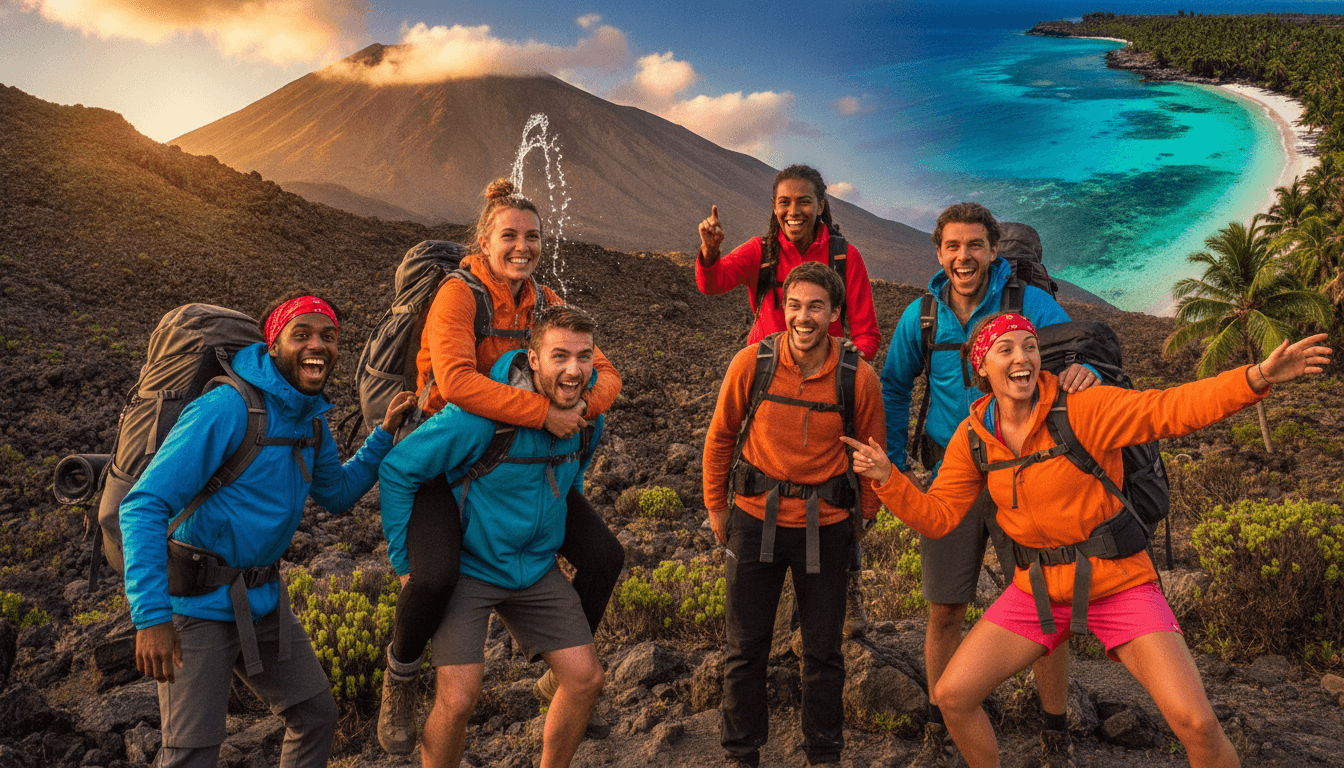
A self-launched version of the classic 7-day Marangu ("Coca-Cola") Route up Mt Kilimanjaro: Africa's highest peak at 5,895m. Rather than joining a small-group G Adventures departure, you book directly with a licensed Moshi-based operator (or assemble guides/porters via the Kilimanjaro Porters Assistance Project's recommended outfitters), stay in a simple guesthouse in Moshi before and after, and use the park's A-frame mountain huts for four nights on the mountain. The Marangu route is the cheapest and quickest way up — forests, moorland, alpine desert, then a midnight summit push past Gilman's Point to Uhuru Peak for sunrise. Costs below assume direct booking with a reputable local operator including park fees, licensed guide, cook, porters and hut fees, plus your own guesthouse nights, meals in town and tips. Prices are realistic backpacker estimates in GBP and vary with season, group size and outfitter.
Day-by-day
Arrive Kilimanjaro Airport → Moshi
Moshi
Land at Kilimanjaro International Airport (JRO) and take a shared taxi or local shuttle the ~45 minutes into Moshi town (around £8-12 shared, £25-35 private). Check into a simple guesthouse near the centre — plenty of twin/double rooms with hot water for £15-25 a night. Use the afternoon to finalise your trek: visit your chosen local outfitter to sign permits paperwork, do the gear check and hire anything missing (sleeping bag ~£35, down jacket ~£18, trekking poles ~£10 for the trip — cheaper than buying). Eat a good dinner in town, buy a 2L water bottle and snacks, and get an early night. Some outfitters include a pre-trek briefing that evening.
🚌Shared airport shuttle/taxi from JRO to Moshi (~£8-12 pp)
🛏Budget guesthouse in Moshi (twin room, ~£18 pp/night)
- →Gear hire and trek briefing with local outfitter
- →Moshi town wander and dinner
Moshi → Marangu Gate → Mandara Huts (2,720m)
Mandara Huts, Kilimanjaro
Early transfer from Moshi to Marangu Gate (~45 mins by shared minibus, usually arranged by your outfitter and included in the trek package). Your guide handles permit registration — this can take an hour at busy times. Then hike 8km through lush rainforest on a well-maintained trail, gaining around 1,000m to Mandara Huts. Look out for blue monkeys and colobus monkeys. Arrive mid-afternoon to tea and a hot dinner cooked by your cook. Mandara has A-frame huts with thin mattresses, shared toilets and no electricity — headlamp essential. Expect cold at night despite the forest.
🚌Shared minibus Moshi to Marangu Gate; 8km trekking
🛏Mandara Huts (A-frame hut, shared, included in trek package)
- →Rainforest hike to Mandara escarpment
- →Park permit and gate registration
- →Monkey spotting in the montane forest
Mandara Huts → Horombo Huts (3,720m)
Horombo Huts, Kilimanjaro
An 11-12km day through the heather and moorland zone, climbing a steady 1,000m with views opening up towards Mawenzi peak and the Kibo saddle. The trail is a mix of open moorland and rocky steps — take it slowly, this is where altitude starts to bite. Lunch is packed by your cook and eaten en route. Reach Horombo Huts in the afternoon: this is the biggest hut complex on the route, with shared dorms, a dining hut and (frequently) no power. Hydrate hard, eat everything you're given, and mention any headaches to your guide. Optional short acclimatisation walk above the huts before dinner if you feel good.
🚌11-12km trekking (~6-7 hrs)
🛏Horombo Huts (shared dorm hut, included in trek package)
- →Moorland hike with views of Mawenzi
- →Optional acclimatisation walk
Horombo Huts → Kibo Huts (4,703m)
Kibo Huts, Kilimanjaro
Cross the Saddle — a stark, high-altitude alpine desert between Mawenzi and Kibo — on a 10km, 5-6 hour walk to the most basic shelter on the route. Kibo Huts sit at 4,703m and are a big shared bunkhouse, very cold at night. Arrive by early afternoon, force down an early dinner (5-6pm), lay out your summit layers and get into your sleeping bag by 7pm. Your guide will brief you on the summit plan, symptoms to watch for, and what to do if altitude sickness hits. This is the night to take it seriously: rest, drink, no alcohol.
🚌10km trekking (~5-6 hrs)
🛏Kibo Huts (shared bunkhouse, included in trek package)
- →Saddle crossing through alpine desert
- →Summit briefing and early night
Kibo Huts → Uhuru Peak (5,895m) → Horombo Huts
Horombo Huts, Kilimanjaro
The big one. Wake around 11pm-12am, layer up and start the switchback climb over scree and frozen ground by headlamp. Reach Gilman's Point (5,681m) on the crater rim around sunrise, then continue along the rim roughly an hour to Uhuru Peak, 5,895m — the roof of Africa. Short celebration, photos, then descend the same way to Kibo for brunch and continue down to Horombo Huts — a long, knee-testing 15-16 hour day in total. Poles help enormously on the way down. If altitude sickness hits, descend promptly with your guide, no negotiation — the mountain will still be there.
🚌Trekking, ~15-16 hrs round trip from Kibo
🛏Horombo Huts (shared dorm hut, included in trek package)
- →Midnight summit ascent via Gilman's Point
- →Sunrise at Uhuru Peak (5,895m)
- →Long descent to Horombo Huts
Horombo Huts → Marangu Gate → Moshi
Moshi
Descend through moorland and forest, roughly 6 hours back to Marangu Gate, passing villages and coffee/banana smallholdings on the lower slopes. Collect your summit certificate at the gate (the real one for reaching Uhuru, the green one for Gilman's), say thank you and hand over the crew tip as a group — budget £100-160 per climber for guide, cook and porters combined, paid in USD or TZS cash. Shared minibus back to Moshi. If you'd like a community stop, the Moshi Women's Cooperative and other local cooperatives can be visited independently (small donation, book by calling ahead) — it's a short boda-boda ride from town. Shower, laundry at the guesthouse, and a big dinner.
🚌Trekking ~6 hrs; shared minibus Marangu Gate to Moshi
🛏Budget guesthouse in Moshi (twin room, ~£18 pp/night)
- →Summit certificate collection
- →Crew tipping ceremony
- →Optional independent visit to Moshi Women's Cooperative
Moshi and depart
Moshi / Kilimanjaro Airport
Slow morning, breakfast at the guesthouse, and a wander round Moshi's market or a coffee tour on the slopes if your flight is late. Shared shuttle or private taxi back to Kilimanjaro International Airport (~£8-25 depending on shared vs private). If you've got a spare day and budget, a one-day Materuni waterfalls and coffee-farm trip runs around £35-45 booked locally — worth it before an evening flight.
🚌Shared shuttle or private taxi Moshi to JRO (~£8-25)
🛏None (departure day)
- →Moshi market browse
- →Optional Materuni waterfall and coffee tour
Self-launched vs. G Adventures
| This itinerary (self-launched) | G Adventures | |
|---|---|---|
| Price per person | ~£1,160 | £1,900 |
| Duration | 7 days | 7 days |
| Who books it | You and your group, direct | Tour operator, guided group |
| Savings | £740 per person (39%) | |
Estimate only, not a guaranteed price. Always verify costs independently before booking.
Want to see more G Adventures-style trips? Check them out here.~£1,160
estimated per person
You never pay Travel Crew for this — you pay hostels, transport, and activity providers directly, the same as if you'd booked it all yourself.
This publishes your dates so other travellers can find and join you — no tour operator needed.
Customise with Tour BusterCreated by
Travel Crew
0 trips
Frequently asked questions
How much does Self-Launched Mt Kilimanjaro Trek — Marangu Route (Budget, Independent) cost?+
Doing it yourself with this self-launched itinerary costs an estimated £1,160 per person for 7 days in Tanzania. This is an AI-generated estimate based on typical budget-traveller prices — actual costs will vary by season and how you book.
Is this cheaper than booking with G Adventures?+
Yes — G Adventures charges around £1,900 per person for a similar tour. Doing the same route independently, using the same standard of accommodation and activities, costs an estimated £1,160 — a saving of roughly £740 (39%) per person.
How long is the Tanzania trip?+
This itinerary runs 7 days, covering 7 day-by-day stops through Tanzania.
How do I join this trip?+
You can join an existing open departure using this itinerary if one is scheduled, or launch your own departure with your own dates and invite other travellers to join you — no tour operator required.
Isn't it easier to just use a tour operator?+
Well, yes, a tour operator will book all the individual parts of your travel for you and provide a guide. That's obvious, but doing this has the potential to save the group thousands, which can in turn improve your itinerary substantially or save you huge amounts of money. Also, when you launch a departure, Travel Crew has tools in place to help you book the individual sections of the trip or make it easier for you to do this as a group. Really, you do not need a middle man. If you are more comfortable paying more and using a middle man, then you should certainly do this.
Is it safer to book through a tour operator?+
Arguably, there isn't much difference. A self-launched trip runs on the same principle as a group travel crew: collective responsibility, everyone looking out for each other, the same way it would if a group of friends organised the trip themselves — because that's exactly what's happening. You should always take out travel insurance before you go, self-launched or not; that doesn't change either way. Every open departure is published publicly with real dates and a real trip organiser, so it's never an anonymous arrangement, and our support team is reachable any time you need help, including in an emergency while you're away. Longer-term, we're building direct relationships with ground DMCs in popular destinations, offered as an optional paid add-on for extra on-the-ground support. Ultimately, though, the group is responsible for its own conduct and safety on a self-launched trip, same as on any trip you plan yourself.
What kind of trip is this?+
This is a adventure, hiking, budget trip through Tanzania, self-launched rather than run by a tour operator — you organise it with a group you find or bring yourself.
Would you like to name the operator, name the trip, or have any suggestions about how to improve this itinerary?
Drop your comment below — if you've done a similar route, tell us what worked, what you'd add, or what you'd skip.
No comments yet — be the first to share your take.
Sign in to leave a comment.