
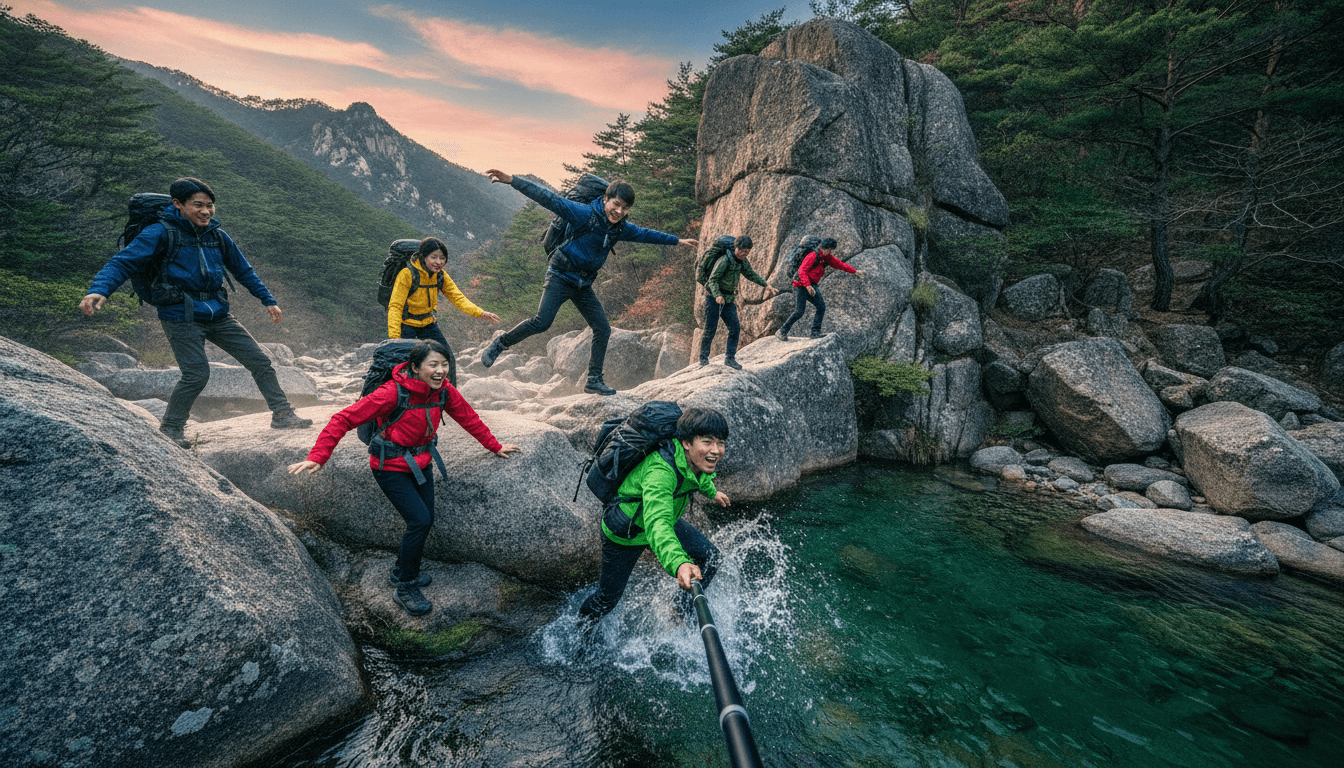
Shining Korea & Essential Japan — Self-Launched
13 days · South Korea & Japan
Europamundo charges £3,550
No-markup version: ~£1,440 per person
Estimate only, not a guaranteed price. Always verify costs independently before booking.
A self-launched version of Europamundo's 13-day Seoul-to-Osaka circuit: Seoul and the DMZ, Suwon and Jeonju hanok country, gochujang-making in Sunchang, Damyang's bamboo forest, Haeinsa temple and Busan, then a short flight to Tokyo, Mount Fuji and Kawaguchiko, on by bus and train via Nagoya to Kyoto, Nara and Osaka. You book your own guesthouses and hostels, use Korea's excellent KTX and metro network and Japan's trains and highway buses, and self-book the handful of activities that need a guide (the DMZ tour is the main one). Costs are rough backpacker/mid-budget estimates in GBP, assuming dorm or simple private rooms, street food and casual restaurants, and standard-class public transport.
Day-by-day
Arrive Seoul — Hongdae or Myeongdong base
Seoul
Land at Incheon (ICN) or Gimpo (GMP) and take the AREX airport express train (~£5, 45 min to Hongdae; ~£6 to Seoul Station) or the all-stop subway for less. Check into a guesthouse or hostel in Hongdae (younger, nightlife, cheap eats) or Myeongdong (central, walkable to palaces). Spend the afternoon acclimatising: pick up a T-money transit card at a convenience store (~£2 card + top up), get a Korean eSIM, and wander the Hongdae street-food lanes or the Myeongdong snack stalls for dinner. Book your DMZ tour for Day 2 tonight — several operators run joint-security-area and Imjingak itineraries through GetYourGuide or Klook for roughly £35–55.
🚌AREX airport express train ICN→Hongdae ~£5; T-money card ~£2
🛏Guesthouse/hostel dorm in Hongdae or Myeongdong (~£15–20pp)
- →AREX airport train into Seoul
- →T-money card and eSIM setup
- →Hongdae or Myeongdong street-food evening
DMZ day trip and Myeongdong by night
Gimpo / Paju / Seoul
Join a small-group or coach DMZ tour (self-booked via GetYourGuide/Klook, ~£40–50 including transport and entry). Typical stops mirror the original itinerary: Imjingak Pavilion and the Freedom Bridge, the Mangbaedan Altar and National Memorial for separated families, the view over the DMZ from an observatory (Aegibong or Dora), and a walk through the Third Tunnel or Dorasan area depending on the operator. Most tours leave around 7–8am from central Seoul and return early afternoon. Lunch is usually a simple Korean set meal near the DMZ (~£8). Back in Seoul, ride the metro to City Hall to see the Deoksugung Palace exterior and the changing of the guard if timed right, then eat dinner in Myeongdong (~£10).
🚌Included in DMZ tour; metro day fares ~£4
🛏Guesthouse/hostel dorm in Hongdae or Myeongdong (~£15–20pp)
- →Guided DMZ tour incl. Imjingak, Freedom Bridge and observatory
- →Deoksugung Palace exterior and City Hall area
- →Myeongdong evening walk
Palaces, hanok lanes and Korean War history
Seoul
Start early at Gyeongbokgung Palace (entry ~£2.50, free if you wear a hanok — rentals from ~£12 for two hours) and catch the royal guard-changing ceremony if scheduled. Walk 15 minutes to Bukchon Hanok Village for the tiled-roof lanes, then continue to Changdeokgung Palace (~£2.50; the Secret Garden tour is a small extra and worth booking ahead). Lunch on buckwheat noodles or gimbap in Insadong (~£7). Take the metro to the War Memorial of Korea (free entry) for a sobering and very well-curated two hours. If you want a city view, ride up Lotte World Tower's Seoul Sky observation deck (~£20, optional) around sunset, then eat Korean BBQ in Gangnam (~£15) — or skip the tower and stay in Insadong for makgeolli.
🚌Metro day fares ~£4–5
🛏Guesthouse/hostel dorm in Hongdae or Myeongdong (~£15–20pp)
- →Gyeongbokgung Palace and guard change
- →Bukchon Hanok Village
- →Changdeokgung Palace (optional Secret Garden tour)
- →War Memorial of Korea
- →Optional Lotte World Tower observation deck
Suwon fortress walls, then train to Jeonju
Suwon → Jeonju
Take the metro or a 30-minute KTX/ITX train south to Suwon (~£3–6). Walk the UNESCO-listed Hwaseong Fortress walls (free to walk; ~£2 for the palace Hwaseong Haenggung), which takes 2–3 hours at an easy pace, and try a Suwon wanggalbi lunch (~£10). In the afternoon take the train from Suwon to Jeonju via Iksan or Daejeon (~£15–20, 2–2.5 hrs). Check into a guesthouse inside or beside Jeonju Hanok Village, then spend the evening walking the hanok lanes and eating bibimbap — Jeonju is the dish's spiritual home (~£8).
🚌Metro/train Seoul→Suwon ~£3–6; Suwon→Jeonju train ~£15–20
🛏Hanok guesthouse in Jeonju Hanok Village (~£20–25pp)
- →Hwaseong Fortress wall walk
- →Hwaseong Haenggung palace
- →Jeonju Hanok Village evening and bibimbap dinner
Gochujang, bamboo forest and Haeinsa temple en route to Busan
Jeonju → Sunchang → Damyang → Haeinsa → Busan
This is the original's packed touring day — doable on public transport but start early. Bus from Jeonju to Sunchang (~1 hr, ~£4) for a gochujang-making workshop at the Sunchang Gochujang Village (book direct or via a local experience platform, ~£15–25). Continue by bus to Damyang (~1 hr) for the Juknokwon bamboo forest (~£2) — and the bamboo-tube rice lunch if you can find it near the entrance (~£9). Bus on to Haeinsa (~1.5 hrs) to see the Tripitaka Koreana temple complex (~£3), then bus down to Daegu or straight on to Busan (~2.5–3 hrs, ~£12). It's a long day; if you'd rather slow down, drop Haeinsa and go Sunchang→Damyang→Busan. Check into a guesthouse near Busan Station or in Haeundae.
🚌Local intercity buses (~£20 total for the day)
🛏Guesthouse/hostel near Busan Station or Haeundae (~£15–20pp)
- →Gochujang-making workshop in Sunchang
- →Juknokwon Bamboo Forest, Damyang
- →Haeinsa Buddhist Temple
Busan: temples, markets and coast
Busan
Take bus 181 or a taxi (~£8) out to Haedong Yonggung Temple, the seaside cliff temple (~free entry, small parking/entry fee ~£1). Come back for the UN Memorial Cemetery (free). In the afternoon explore Gamcheon Culture Village (free; the original skipped it but it's the best thing in Busan), then Nampo's Jagalchi fish market for a late lunch (~£10). Walk up Yongdusan Park for the tower views, and finish at Songdo Beach for the marine cable car (~£12 return) or a sunset stroll. Seafood dinner in Nampo or Haeundae (~£12).
🚌City buses and metro ~£5; taxi to Yonggung ~£8
🛏Guesthouse/hostel near Busan Station or Haeundae (~£15–20pp)
- →Haedong Yonggung Temple
- →UN Memorial Cemetery
- →Gamcheon Culture Village
- →Jagalchi fish market and Yongdusan Park
- →Songdo marine cable car
Fly Busan to Tokyo
Busan → Tokyo
Cheap direct flights Busan (PUS) to Tokyo Narita or Haneda run with Jeju Air, Air Busan and Peach from roughly £45–75 one-way booked a few weeks out. Fly out mid-morning, land early afternoon, and take the Keikyu Line or Limousine Bus into the city (~£8–12). Base yourself in Asakusa or Ueno for cheaper guesthouses and easy transport, or Shinjuku for nightlife. Collect a Suica/Pasmo card or add it to your phone, and pick up an eSIM. Evening: wander Asakusa's Sumida riverside and grab ramen or a standing sushi bar dinner (~£9).
🚌Flight PUS→TYO ~£45–75; airport train ~£8–12
🛏Hostel/guesthouse in Asakusa, Ueno or Shinjuku (~£25–32pp)
- →Flight to Tokyo
- →Asakusa riverside evening
- →Suica card and eSIM setup
Tokyo's temples, towers and neon
Tokyo
Do the original's Tokyo highlights as a self-guided loop. Start at Zojoji Temple with Tokyo Tower behind it, then take the JR Yamanote Line to Harajuku for Meiji Shrine (free) and Omotesando. Head to Asakusa for Sensoji Temple and the Nakamise shopping street (free), then cross town to the Tokyo Skytree Tembo Deck (~£16 booked online; cheaper on weekdays). Finish in Akihabara for electronics and arcades, then Ginza or Shinjuku for dinner (~£12) — Shinjuku's Omoide Yokocho yakitori alleys are the budget move, and the Metropolitan Government Building observatory is free at night. Consider swapping one temple for TeamLab Planets (~£20) if you want more modern Tokyo, as reviewers of the original tour suggested.
🚌JR/metro day pass or Suica ~£7
🛏Hostel/guesthouse in Asakusa, Ueno or Shinjuku (~£25–32pp)
- →Zojoji Temple and Tokyo Tower views
- →Meiji Shrine and Harajuku
- →Sensoji Temple and Nakamise Street
- →Tokyo Skytree Tembo Deck
- →Akihabara, Ginza and Shinjuku evening
Mount Fuji and Lake Kawaguchiko
Tokyo → Kawaguchiko
Take the Fuji Excursion limited express from Shinjuku to Kawaguchiko (~£18, 2 hrs) or the cheaper highway bus from Shinjuku/Busta Shinjuku (~£10, 2 hrs). Drop bags at your guesthouse or a coin locker, then visit Arakurayama Sengen Park for the classic five-storey pagoda-and-Fuji view (free) and Fuji Sengen Shrine. In the afternoon ride the Kawaguchiko sightseeing bus to the lakeshore, take a pleasure boat (~£7) or the Kachi Kachi ropeway (~£6), and if the road is open take the Fuji Subaru Line bus to the Fifth Station (~£9 return). Stay the night in a cheap ryokan or guesthouse with an onsen (many have dorm-style or simple tatami rooms ~£30–40pp) and eat a set dinner there or at a local udon shop (~£10).
🚌Shinjuku→Kawaguchiko train ~£18 or bus ~£10; local buses ~£6
🛏Guesthouse or simple ryokan with onsen, Kawaguchiko (~£30–40pp)
- →Arakurayama Sengen Park pagoda view
- →Fuji Sengen Shrine
- →Lake Kawaguchiko boat or ropeway
- →Optional Mount Fuji Fifth Station bus
Iyashi no Sato, Shiraito Falls and on to Kyoto
Kawaguchiko → Nagoya → Kyoto
Take the local bus along the lake to Iyashi no Sato Nenba, the thatched-roof open-air craft village (~£3 entry, ~£3 bus). Continue by bus or taxi to Shiraito Falls (~£2) for a short walk to the wide curtain waterfall. Then it's a travel day: bus or train down to Mishima/Shizuoka and a shinkansen to Nagoya (~£35–45 total), stop for the Toyota Commemorative Museum of Industry and Technology (~£3) if you're interested in cars, then continue by shinkansen to Kyoto (~£25, 35 min) or the cheaper JR Special Rapid (~£5, 2 hrs). Check into a guesthouse in Kyoto Station or Gion/Kawaramachi area and eat at Nishiki Market-adjacent izakaya (~£10).
🚌Local buses ~£6; shinkansen/local trains to Kyoto ~£40–70
🛏Guesthouse/hostel in Kyoto (~£20–28pp)
- →Iyashi no Sato Nenba thatched village
- →Shiraito Falls
- →Optional Toyota Museum, Nagoya
- →Evening in central Kyoto
Arashiyama, Fushimi Inari and the Golden Pavilion
Kyoto
Get up early — Kyoto rewards it. Bus or train to Arashiyama for the Togetsukyo Bridge and the bamboo grove before 8am, then Tenryuji Temple and its garden (~£4). Head south by train to Fushimi Inari Shrine (free, open 24 hrs) and walk at least to the Yotsutsuji viewpoint (~45 min up). Lunch near Kyoto Station (~£8). In the afternoon bus to Kinkakuji, the Golden Pavilion (~£3), then the Imperial Palace gardens (free, no booking needed for the gardens). Finish with a stroll through Gion at dusk (~free) and dinner in Pontocho alley (~£13). A one-day bus pass (~£4) covers most of this, though the trains are faster between Arashiyama and Fushimi.
🚌City bus/train day ~£6
🛏Guesthouse/hostel in Kyoto (~£20–28pp)
- →Arashiyama bamboo grove and Togetsukyo Bridge
- →Tenryuji Temple
- →Fushimi Inari Shrine hike
- →Kinkakuji Golden Pavilion
- →Gion and Pontocho evening
Nara's temples and deer, then Osaka
Kyoto → Nara → Osaka
Take the Kintetsu or JR train from Kyoto to Nara (~£5, 45 min). Walk from the station to Todaiji Temple and its Great Buddha (~£4), feeding the deer in Nara Park on the way (deer crackers ~£1). Carry on to Kasuga Taisha or, if you want the original's Horyuji stop, take a bus/train to Horyuji (~£3, the world's oldest surviving wooden temple complex) before heading back. Lunch on kakinoha-zushi or a Nara set meal (~£8). In the afternoon take the Kintetsu line to Osaka Namba (~£5, 40 min), check in near Namba or Honmachi, and spend the evening eating your way through Dotonbori — takoyaki, kushikatsu and okonomiyaki (~£13).
🚌Kyoto→Nara ~£5; Nara→Osaka ~£5; local buses ~£3
🛏Hostel/budget hotel in Namba or Honmachi, Osaka (~£20–28pp)
- →Todaiji Temple and Nara Park deer
- →Optional Horyuji Temple
- →Dotonbori street-food evening
Osaka farewell
Osaka
A free morning for Osaka Castle park (free to walk; ~£3 for the keep) or a last Kuromon Market breakfast (~£7). Head to Kansai Airport (KIX) via the Nankai Rapi:t or airport express from Namba (~£8, 45 min) or the cheaper JR Haruka from Tennoji. If you're flying back to Seoul, Jeju Air and Peach have the cheapest short-hop fares (~£40–60).
🚌Nankai airport express Namba→KIX ~£8
🛏—
- →Osaka Castle park or Kuromon Market
- →Airport transfer to KIX
Self-launched vs. Europamundo
| This itinerary (self-launched) | Europamundo | |
|---|---|---|
| Price per person | ~£1,440 | £3,550 |
| Duration | 13 days | 13 days |
| Who books it | You and your group, direct | Tour operator, guided group |
| Savings | £2,110 per person (59%) | |
Estimate only, not a guaranteed price. Always verify costs independently before booking.
Want to see more Europamundo-style trips? Check them out here.~£1,440
estimated per person
You never pay Travel Crew for this — you pay hostels, transport, and activity providers directly, the same as if you'd booked it all yourself.
This publishes your dates so other travellers can find and join you — no tour operator needed.
Customise with Tour BusterCreated by

Travel Crew
0 trips
Frequently asked questions
How much does Shining Korea & Essential Japan — Self-Launched cost?+
Doing it yourself with this self-launched itinerary costs an estimated £1,440 per person for 13 days in South Korea & Japan. This is an AI-generated estimate based on typical budget-traveller prices — actual costs will vary by season and how you book.
Is this cheaper than booking with Europamundo?+
Yes — Europamundo charges around £3,550 per person for a similar tour. Doing the same route independently, using the same standard of accommodation and activities, costs an estimated £1,440 — a saving of roughly £2,110 (59%) per person.
How long is the South Korea & Japan trip?+
This itinerary runs 13 days, covering 13 day-by-day stops through South Korea & Japan.
How do I join this trip?+
You can join an existing open departure using this itinerary if one is scheduled, or launch your own departure with your own dates and invite other travellers to join you — no tour operator required.
Isn't it easier to just use a tour operator?+
Well, yes, a tour operator will book all the individual parts of your travel for you and provide a guide. That's obvious, but doing this has the potential to save the group thousands, which can in turn improve your itinerary substantially or save you huge amounts of money. Also, when you launch a departure, Travel Crew has tools in place to help you book the individual sections of the trip or make it easier for you to do this as a group. Really, you do not need a middle man. If you are more comfortable paying more and using a middle man, then you should certainly do this.
Is it safer to book through a tour operator?+
Arguably, there isn't much difference. A self-launched trip runs on the same principle as a group travel crew: collective responsibility, everyone looking out for each other, the same way it would if a group of friends organised the trip themselves — because that's exactly what's happening. You should always take out travel insurance before you go, self-launched or not; that doesn't change either way. Every open departure is published publicly with real dates and a real trip organiser, so it's never an anonymous arrangement, and our support team is reachable any time you need help, including in an emergency while you're away. Longer-term, we're building direct relationships with ground DMCs in popular destinations, offered as an optional paid add-on for extra on-the-ground support. Ultimately, though, the group is responsible for its own conduct and safety on a self-launched trip, same as on any trip you plan yourself.
What kind of trip is this?+
This is a culture, city-breaks, foodie trip through South Korea & Japan, self-launched rather than run by a tour operator — you organise it with a group you find or bring yourself.
Would you like to name the operator, name the trip, or have any suggestions about how to improve this itinerary?
Drop your comment below — if you've done a similar route, tell us what worked, what you'd add, or what you'd skip.
No comments yet — be the first to share your take.
Sign in to leave a comment.