
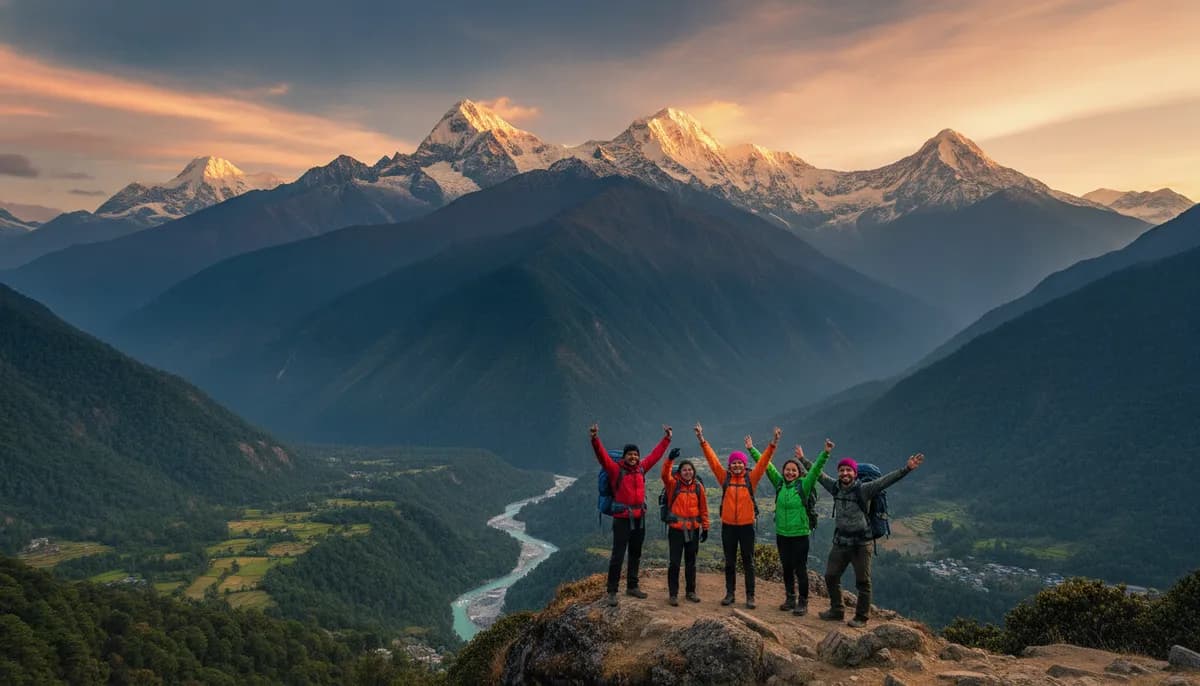
Annapurna Circuit Trek — Self-Launched 15-Day Version
15 days · Nepal
Sherpa Expedition Teams charges £1,000
No-markup version: ~£150 per person
Estimate only, not a guaranteed price. Always verify costs independently before booking.
A self-launched version of the classic 15-day Annapurna Circuit from Kathmandu to Kathmandu via Besisahar, Chame, Pisang, Manang, Thorong La Pass (5,416m), Muktinath, Jomsom and Pokhara. You replicate the operator's route using public buses, shared jeeps, teahouse lodges and a locally-hired licensed guide/porter (required under Nepali trekking rules), booking each leg yourself. Trekking independently gets you the same mountains for roughly a third of the guided tour price.
Day-by-day
Arrival in Kathmandu
Kathmandu
Land at Tribhuvan International Airport and take a prepaid taxi to Thamel (Rs 800-1,000 / ~£5-6) rather than a private transfer. Check into a budget guesthouse in Thamel. Spend the afternoon buying your TIMS card and ACAP permit (Nepal Tourism Board office, Bhrikutimandap, or via the Nepal Trekking Agencies office) and picking up last-minute gear — Kathmandu has cheap rental down jackets and sleeping bags (£1-2/day). Arrange your licensed guide here (legally required for the Annapurna region since 2023): expect roughly £18-22/day for a guide, or £15-18/day for a porter.
🚌Prepaid airport taxi to Thamel, ~£5-6
🛏Budget guesthouse in Thamel (dorm/private, £6-12)
- →Prepaid taxi to Thamel
- →Buy TIMS card + ACAP permit at Nepal Tourism Board
- →Rent down jacket/sleeping bag
- →Book guide via Kathmandu trekking agency
Kathmandu to Bhulbhule via Besisahar
Bhulbhule
Take an early tourist bus or local bus from Kathmandu's Gongabu (Machha Pokhari) bus park to Besisahar, roughly 6-7 hours, ~£6-9. From Besisahar catch a shared jeep or local bus up the dirt road to Bhulbhule, about 2 hours, ~£3-5. Overnight in a teahouse above the Marsyangdi River. Meals are now on the teahouse menu — dhal bhat (unlimited refills) is the cheapest and best fuel at ~£3-4.
🚌Public bus ~£7 + shared jeep ~£4
🛏Teahouse in Bhulbhule (twin room, £3-5, sometimes free with meals)
- →Public bus Kathmandu to Besisahar
- →Shared jeep Besisahar to Bhulbhule
- →Teahouse dinner by the Marsyangdi
Bhulbhule to Chamje
Chamje
A steady trekking day of about 6-7 hours along the Marsyangdi valley, crossing long suspension bridges and passing waterfalls. The trail works through rice fields and terraced hillsides with villages like Ngadi and Jagat for lunch stops. Pay the ACAP checkpost fee at Jagat if not done earlier and have your TIMS card checked. Chamje sits just before the trail turns steeply up towards Tal.
🚌On foot, ~6-7 hours
🛏Teahouse in Chamje (twin room, £3-5)
- →Suspension bridge crossings
- →Waterfall viewpoints
- →ACAP/TIMS checkpost at Jagat
- →Rice terrace and hillside walking
Chamje to Bagarchhap
Bagarchhap
Climb steeply to Tal, the first village inside the Manang district, where the valley opens dramatically. Continue via Tal Phedi, Karte and Naje to Dharapani, then on to Bagarchhap among apple orchards and pine. Roughly 6-7 hours walking. Bagarchhap is a lovely quiet teahouse village — try the local apple brandy in the evening.
🚌On foot, ~6-7 hours
🛏Teahouse in Bagarchhap (twin room, £3-5)
- →Climb to Tal village
- →Marsyangdi River trail
- →Walk through Karte, Naje and Dharapani
- →Apple orchards at Bagarchhap
Bagarchhap to Chame
Chame
Continue through Danakyu and into rhododendron and oak forest, with a lunch stop at Timang Danda offering the first sweeping views of Mt. Manaslu. Pass Latamarang, Thanchowk and Koto before reaching Chame, the administrative headquarters of Manang district. Expect your first real cold nights from here — check your sleeping bag rating. About 5-6 hours walking.
🚌On foot, ~5-6 hours
🛏Teahouse in Chame (twin room, £4-6)
- →Forest trekking via Danakyu
- →Lunch at Timang Danda with Mt. Manaslu views
- →Walk via Koto to Chame
- →Hot springs at Chame (optional)
Chame to Pisang
Pisang
A dramatic day — the valley narrows into a gorge and Annapurna II looms directly overhead. Trek through Telekhu, cross a bridge over the Marsyangdi, then walk through pine forest to Pisang. About 5-6 hours. Upper Pisang (Ghyaru side) is quieter and has better views; Lower Pisang is cheaper and sunnier. Either works as a base.
🚌On foot, ~5-6 hours
🛏Teahouse in Pisang (twin room, £4-6)
- →Marsyangdi bridge crossing
- →Pine forest trekking
- →Annapurna II and Pisang Peak views
- →Choose Upper or Lower Pisang for the night
Pisang to Braga (via Manang side)
Braga
A short, easy day — walk up to Braga (or nearby Manang) and use the spare hours to acclimatise gently. Visit Braga Gompa, a 500-year-old monastery perched on the cliff above the village. Afternoon is for resting, hydrating and eating well at altitude. Only 3-4 hours walking, deliberately light before the acclimatisation day.
🚌On foot, ~3-4 hours
🛏Teahouse in Braga or Manang (twin room, £4-6)
- →Walk Pisang to Braga
- →Visit Braga Gompa monastery
- →Afternoon rest and hydration at altitude
Acclimatisation day at Braga/Manang
Manang
Essential rest day before the pass. Take a day-hike to Mt. Khangsar viewpoint (3,756m) or climb to the Gangapurna Lake viewpoint behind Manang — both help your body adjust without gaining sleeping altitude. Manang has bakeries, a small Himalayan Rescue Association clinic giving free altitude talks (worth attending), and shops for last-minute supplies. Don't skip this day; most altitude problems on the Circuit are caused by rushing past Manang.
🚌On foot, day hike ~4-5 hours
🛏Teahouse in Manang/Braga (twin room, £4-6)
- →Day hike to Mt. Khangsar (3,756m)
- →Gangapurna Lake viewpoint
- →Altitude sickness talk at HRA clinic, Manang
- →Resupply and rest
Manang to Yak Kharka (or Letdar)
Yak Kharka
Leave the tree line behind and climb through juniper scrub to Yak Kharka, about 10.4 km / 4-5 hours. If you feel strong and are well-acclimatised you can push on to Letdar for a slightly shorter next day — but don't force it. Nights are cold from here (below freezing possible), so a good sleeping bag is essential and many teahouses charge for extra blankets.
🚌On foot, ~4-5 hours
🛏Teahouse at Yak Kharka (twin room, £4-6)
- →Trek through juniper forests
- →Walk to Yak Kharka (10.4 km)
- →Optional continuation to Letdar
- →Thorong Khola valley views
Yak Kharka to Thorong Phedi
Thorong Phedi
A short acclimatisation-friendly day along the east bank of the Jarang Khola to Thorong Phedi (4,450m), only 3-4 hours. Keep an eye out for blue sheep, and occasionally snow leopard tracks, on the slopes above. Arrive early, eat a big early dinner at 4-5pm and sleep early — you'll be starting the pass before dawn. Consider high-camp (Thorong High Camp, 4,850m) instead if you want a shorter summit morning, but it's colder and can worsen sleep.
🚌On foot, ~3-4 hours
🛏Teahouse at Thorong Phedi or High Camp (twin room, £5-7)
- →Trek east bank of Jarang Khola
- →Wildlife spotting (blue sheep, lammergeyer)
- →Early dinner and early night at Thorong Phedi
Thorong Phedi over Thorong La to Muktinath
Muktinath
The big day. Start at 4-5am with headtorch and microspikes (useful Oct-Nov) to reach Thorong La Pass (5,416m) in about 4 hours, then descend roughly 1,600m over 3-4 hours to Muktinath. Views of Annapurna, Gangapurna, Khatungkang and Dhaulagiri from the pass. Watch for symptoms of AMS — descend immediately if you feel bad. At Muktinath, visit the pilgrimage temple complex (Hindu and Buddhist) and its 108 water spouts, then sleep low in Ranipauwa or Muktinath village.
🚌On foot, ~7-8 hours
🛏Teahouse/guesthouse at Muktinath/Ranipauwa (twin room, £5-8)
- →Dawn ascent to Thorong La Pass (5,416m)
- →Long descent to Muktinath
- →Muktinath temple complex and 108 water spouts
- →Annapurna and Dhaulagiri viewpoints
Muktinath to Jomsom via Kagbeni
Jomsom
Descend through Kagbeni, a fascinating medieval village with a red gompa and the gateway to Upper Mustang — worth an hour's wander. Try the local apple cider or apple brandy (Marpha's produce is famous further down the valley). Continue down the windy Kali Gandaki Valley to Jomsom, about 5-6 hours walking. Jomsom is a dusty, windy town with bakeries, airstrip and ATMs — a good place to rest and recharge.
🚌On foot, ~5-6 hours
🛏Guesthouse in Jomsom (twin room, £5-8)
- →Explore Kagbeni village and gompa
- →Optional apple cider tasting
- →Kali Gandaki Valley walk to Jomsom
Jomsom to Pokhara
Pokhara
Fly Jomsom-Pokhara with a local airline (Yeti/Tara/Summit, ~£80-100, 20-minute dramatic flight) or take the far cheaper two-day shared jeep route via Beni if you're on a tight budget. In Pokhara, check into a Lakeside guesthouse near Phewa Tal. Spend the afternoon visiting the Peace Pagoda (short boat + uphill walk), Matepani Monastery, the International Mountain Museum and Devi's Falls, then catch sunset over Phewa Lake from a Lakeside rooftop bar.
🚌Domestic flight ~£90 or shared jeep via Beni ~£15
🛏Lakeside guesthouse in Pokhara (private room, £8-14)
- →Scenic flight Jomsom to Pokhara
- →Peace Pagoda and Phewa Lake boat
- →International Mountain Museum
- →Devi's Falls
- →Sunset by Phewa Tal
Pokhara to Kathmandu
Kathmandu
A rest day with travel. Take a tourist bus Pokhara-Kathmandu (7-8 hours, ~£9-12) or grab a cheap domestic flight if you'd rather save the day (~£70-90). Back in Thamel, enjoy a hot shower, a proper meal and explore the alleyways of Thamel for souvenirs, trekking gear and bookshops. Optional: a farewell dinner at a Nepali restaurant with live folk music.
🚌Tourist bus Pokhara-Kathmandu ~£10 (or flight ~£80)
🛏Budget guesthouse in Thamel (private room, £6-14)
- →Tourist bus or flight to Kathmandu
- →Thamel shopping and exploration
- →Optional Nepali folk-music dinner
Departure from Kathmandu
Kathmandu
Depending on your flight time, go for a final Thamel breakfast or walk to Swayambhunath (Monkey Temple) if you have a late departure. Take a prepaid taxi back to Tribhuvan International Airport, about £5-6 and 30-45 minutes depending on traffic. Leave extra time — Kathmandu traffic is unpredictable.
🚌Prepaid taxi to airport ~£5-6
🛏N/A
- →Optional Swayambhunath (Monkey Temple) visit
- →Last Thamel breakfast
- →Prepaid airport taxi
Self-launched vs. Sherpa Expedition Teams
| This itinerary (self-launched) | Sherpa Expedition Teams | |
|---|---|---|
| Price per person | ~£150 | £1,000 |
| Duration | 15 days | 15 days |
| Who books it | You and your group, direct | Tour operator, guided group |
| Savings | £850 per person (85%) | |
Estimate only, not a guaranteed price. Always verify costs independently before booking.
Want to see more Sherpa Expedition Teams-style trips? Check them out here.~£150
estimated per person
You never pay Travel Crew for this — you pay hostels, transport, and activity providers directly, the same as if you'd booked it all yourself.
This publishes your dates so other travellers can find and join you — no tour operator needed.
Customise with Tour BusterCreated by

Travel Crew
0 trips
Frequently asked questions
How much does Annapurna Circuit Trek — Self-Launched 15-Day Version cost?+
Doing it yourself with this self-launched itinerary costs an estimated £150 per person for 15 days in Nepal. This is an AI-generated estimate based on typical budget-traveller prices — actual costs will vary by season and how you book.
Is this cheaper than booking with Sherpa Expedition Teams?+
Yes — Sherpa Expedition Teams charges around £1,000 per person for a similar tour. Doing the same route independently, using the same standard of accommodation and activities, costs an estimated £150 — a saving of roughly £850 (85%) per person.
How long is the Nepal trip?+
This itinerary runs 15 days, covering 15 day-by-day stops through Nepal.
How do I join this trip?+
You can join an existing open departure using this itinerary if one is scheduled, or launch your own departure with your own dates and invite other travellers to join you — no tour operator required.
Isn't it easier to just use a tour operator?+
Well, yes, a tour operator will book all the individual parts of your travel for you and provide a guide. That's obvious, but doing this has the potential to save the group thousands, which can in turn improve your itinerary substantially or save you huge amounts of money. Also, when you launch a departure, Travel Crew has tools in place to help you book the individual sections of the trip or make it easier for you to do this as a group. Really, you do not need a middle man. If you are more comfortable paying more and using a middle man, then you should certainly do this.
Is it safer to book through a tour operator?+
Arguably, there isn't much difference. A self-launched trip runs on the same principle as a group travel crew: collective responsibility, everyone looking out for each other, the same way it would if a group of friends organised the trip themselves — because that's exactly what's happening. You should always take out travel insurance before you go, self-launched or not; that doesn't change either way. Every open departure is published publicly with real dates and a real trip organiser, so it's never an anonymous arrangement, and our support team is reachable any time you need help, including in an emergency while you're away. Longer-term, we're building direct relationships with ground DMCs in popular destinations, offered as an optional paid add-on for extra on-the-ground support. Ultimately, though, the group is responsible for its own conduct and safety on a self-launched trip, same as on any trip you plan yourself.
What kind of trip is this?+
This is a adventure, hiking, backpacker trip through Nepal, self-launched rather than run by a tour operator — you organise it with a group you find or bring yourself.
Would you like to name the operator, name the trip, or have any suggestions about how to improve this itinerary?
Drop your comment below — if you've done a similar route, tell us what worked, what you'd add, or what you'd skip.
No comments yet — be the first to share your take.
Sign in to leave a comment.