
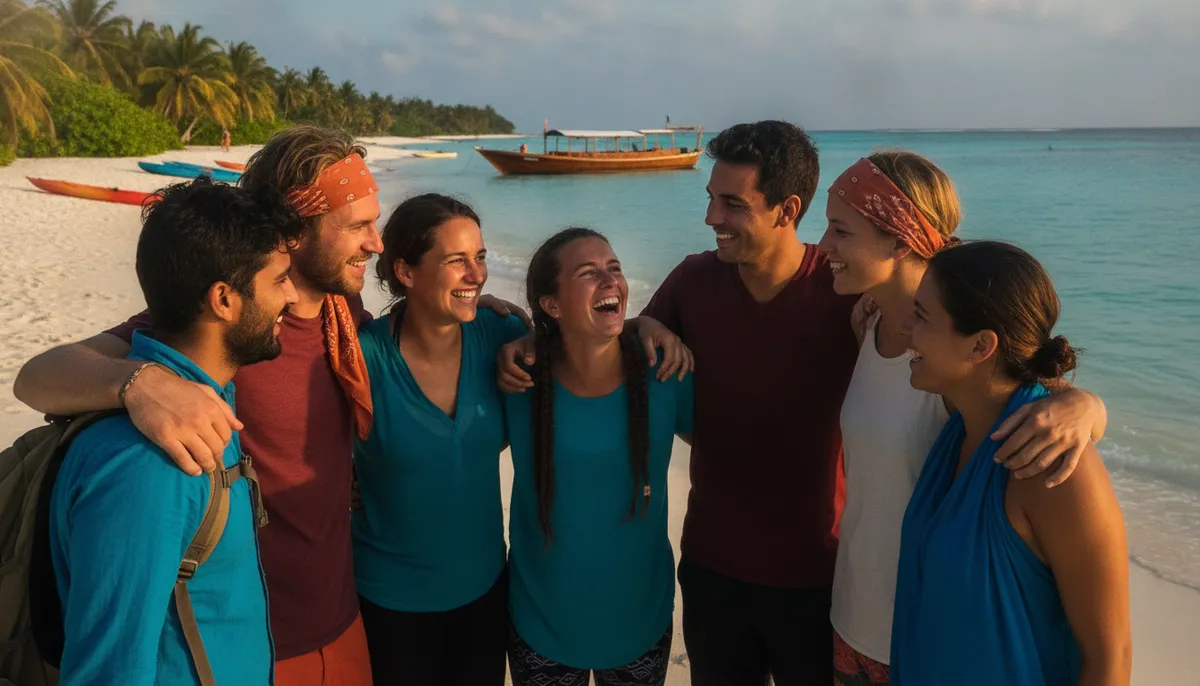
Self-Launched Maldives Marine Wildlife & Snorkel Week: Local Islands, Atolls & Conservation
8 days · Maldives
Much Better Adventures charges £2,850
No-markup version: ~£545 per person
Estimate only, not a guaranteed price. Always verify costs independently before booking.
An independent, budget-friendly take on Much Better Adventures' 8-day marine wildlife liveaboard. Instead of a private gulet charter, you'll piece together the same north-Malé → Goidhoo → Fulhadhoo → Baa Atoll loop using public speedboats, local ferries and guesthouses on inhabited local islands. You'll still snorkel reefs, seagrass beds and giant coral heads, visit the Fulhadhoo coral reef rehabilitation project and the Olive Ridley turtle rescue centre, do a beach clean on an uninhabited island, and finish with a sandbank day in Baa Atoll — all self-bookable, no group tour required. Note: this is a DIY itinerary, so there's no liveaboard sundeck and some inter-atoll hops depend on the local speedboat schedule; plan an extra day of slack if you want to move between Goidhoo and Baa Atoll. Costs are approximate backpacker/mid-budget estimates in GBP, excluding international flights.
Day-by-day
Arrive Malé, transfer to Hulhumalé guesthouse
Hulhumalé / Malé
Fly into Velana International Airport (MLE). Rather than boarding a chartered gulet, take a 10–15 minute taxi (£7–10) to Hulhumalé, the reclaimed island just across the water, and check into a local guesthouse. Spend the afternoon acclimatising: walk the public beach at Hulhumalé, sort out a Maldivian SIM/data eSIM (£8–12), and buy a refillable water bottle and reef-safe sunscreen. In the evening, eat at a local cafe — mas huni (tuna, coconut, chilli) with roshi flatbread, or a tuna curry, £4–6.
🚌Taxi from Malé airport to Hulhumalé, ~£7–10; or local ferry across to Malé if you're staying there
🛏Local guesthouse in Hulhumalé (double/twin, en suite, air-con), £25–35/night
- →Airport taxi to Hulhumalé
- →Hulhumalé public beach walk
- →Local Maldivian dinner
Speedboat to Goidhoo Atoll: first reef snorkel
Goidhoo Atoll
Maldivian local-island transport runs on a fixed schedule — check with your guesthouse the day before. Take the morning public speedboat/scheduled local ferry toward Goidhoo (Baa Atoll's southern edge), typically 2–3 hours and £35–55 one way. Check into a Goidhoo guesthouse, then hire a mask, snorkel and fins from the guesthouse or dive shop (£5–8/day) and do your first reef snorkel on the house reef — coral gardens, parrotfish, angelfish, moray eels and a fair chance of blacktip reef sharks. Note: guesthouses here can arrange a local boat + snorkel guide for ~£30–50 for a half day, or you can snorkel straight off the beach.
🚌Scheduled public speedboat Malé/Hulhumalé–Goidhoo, ~£35–55
🛏Goidhoo guesthouse, £25–35/night
- →Public speedboat transfer to Goidhoo
- →House-reef snorkel
- →Snorkel gear hire
Seagrass meadows, mangroves and Goidhoo island life
Goidhoo Island
Morning snorkel over the seagrass beds and reef edge around Goidhoo — watch for grazing green turtles and eagle rays. Either self-guided or with a guesthouse boat guide (£30–40 shared). In the afternoon, walk the island: Goidhoo is one of the Maldives' quieter inhabited islands, with a historic old mosque, shipyard and mangrove wetland areas. Local conservation groups and guesthouses sometimes run short ecosystem talks — just ask your host. Don't walk on seagrass flats at low tide.
🚌Walking; optional local boat for snorkel, £30–40 shared with guide
🛏Goidhoo guesthouse, £25–35/night
- →Seagrass reef snorkel
- →Goidhoo island walking tour (self-guided)
- →Mangrove and wetland walk
Fulhadhoo: giant coral snorkel and the reef rehabilitation project
Fulhadhoo
Hop across to Fulhadhoo island (short local boat/speedboat, ~£15–30, arranged via guesthouse). Snorkel one of the atoll's largest coral formations in the morning — a dense reef fish community and occasional reef shark. In the afternoon, visit the Fulhadhoo Coral Reef Rehabilitation Project site, part of the Save the Beach Maldives 'Reef Stars' initiative, and the island's Baa Atoll UNESCO Biosphere Reserve context — you can usually arrange a short site visit or talk through your guesthouse; you can also support the project directly with a small donation (their work is publicly documented and open to visitor interest).
🚌Local boat/inter-island transfer to Fulhadhoo, ~£15–30
🛏Fulhadhoo guesthouse, £25–35/night
- →Boat to Fulhadhoo
- →Giant coral snorkel
- →Visit Fulhadhoo coral reef rehabilitation project site
Uninhabited island, beach clean and second reef snorkel
Fulhadhoo
No long cruising today. Take a morning snorkel on a different Fulhadhoo reef — groupers, snapper, surgeonfish, and octopus and reef squid tucked into crevices. Ask your guesthouse or a local boat to drop you at a nearby uninhabited island or sandbank for the afternoon. Bring gloves and a bag and do your own beach clean (marine debris washes up even on remote islands — fishing rope, plastic). Take a second snorkel on the way back. Fair warning: spend the evening confirming tomorrow's transfer options with your guesthouse.
🚌Half-day local boat hire with guide, ~£35–50 shared
🛏Fulhadhoo guesthouse, £25–35/night
- →Two reef snorkel sessions
- →Uninhabited island visit
- →Beach clean
Turtle rescue centre and transfer into South Baa Atoll
Dhuni Kolhu / Baa Atoll
Travel north into South Baa Atoll. Use scheduled island speedboats or ferry hops via Eydhafushi (Baa Atoll's capital) and Dharavandhoo — typically £30–50 in total, sometimes with a night's stop; check schedules in advance as they are limited. On the way, arrange a visit to the Olive Ridley Project's Marine Turtle Rescue Centre at Coco Palm Dhuni Kolhu — visits must be pre-booked directly with the centre (small donation/entry fee, typically $10–25) and are usually run on a short set schedule, so email ahead. Learn how injured hawksbill and green turtles are rehabilitated and released, and the threats from ghost nets.
🚌Scheduled inter-island speedboats/ferries via Eydhafushi or Dharavandhoo, ~£30–50
🛏Guesthouse on Dharavandhoo or Eydhafushi, £30–40/night
- →Transfer to South Baa Atoll
- →Olive Ridley Project turtle rescue centre visit
Turtle identification snorkel and a sandbank afternoon
Baa Atoll (Dharavandhoo)
Morning guided snorkel with a local boat from Dharavandhoo (~£30–45 shared): Baa Atoll reefs are known for green turtles and hawksbills. If you're keen, ask your guide to teach you turtle photo-ID — researchers identify individuals from the facial scale pattern, and you can log sightings for citizen-science projects. In the afternoon, head to a sandbank — the classic Baa Atoll white-sand spit a short boat ride from Dharavandhoo, ideal for floating and swimming. (Note: Hanifaru Bay manta season runs roughly May–November and is a permit/regulated activity — book through a licensed local operator if you want to add it, ~£35–60, and expect rules on distance from animals.)
🚌Local boat hires from Dharavandhoo, ~£30–45 shared
🛏Guesthouse on Dharavandhoo or Eydhafushi, £30–40/night
- →Turtle snorkel with local guide
- →Turtle photo-ID practice
- →Sandbank afternoon
Ferry/speedboat back to Malé and fly out
Baa Atoll to Malé
Return to Malé/Hulhumalé by scheduled speedboat or domestic flight (Dharavandhoo–Malé flights via Maldivian airlines ~£60–90, or a long public speedboat ~£50–70). Allow a generous buffer before your international flight — the Maldivian transport network is schedule-driven and weather can delay boats. Book flights departing no earlier than late afternoon on Day 8, or add a final night in Hulhumalé.
🚌Scheduled speedboat or domestic flight Dharavandhoo–Malé, ~£50–90
🛏None (flight out) or optional Hulhumalé guesthouse £25–35
- →Transfer back to Malé
- →Optional last swim at Hulhumalé public beach
Self-launched vs. Much Better Adventures
| This itinerary (self-launched) | Much Better Adventures | |
|---|---|---|
| Price per person | ~£545 | £2,850 |
| Duration | 8 days | 8 days |
| Who books it | You and your group, direct | Tour operator, guided group |
| Savings | £2,305 per person (81%) | |
Estimate only, not a guaranteed price. Always verify costs independently before booking.
Want to see more Much Better Adventures-style trips? Check them out here.~£545
estimated per person
You never pay Travel Crew for this — you pay hostels, transport, and activity providers directly, the same as if you'd booked it all yourself.
This publishes your dates so other travellers can find and join you — no tour operator needed.
Customise with Tour BusterCreated by

Travel Crew
0 trips
Frequently asked questions
How much does Self-Launched Maldives Marine Wildlife & Snorkel Week: Local Islands, Atolls & Conservation cost?+
Doing it yourself with this self-launched itinerary costs an estimated £545 per person for 8 days in Maldives. This is an AI-generated estimate based on typical budget-traveller prices — actual costs will vary by season and how you book.
Is this cheaper than booking with Much Better Adventures?+
Yes — Much Better Adventures charges around £2,850 per person for a similar tour. Doing the same route independently, using the same standard of accommodation and activities, costs an estimated £545 — a saving of roughly £2,305 (81%) per person.
How long is the Maldives trip?+
This itinerary runs 8 days, covering 8 day-by-day stops through Maldives.
How do I join this trip?+
You can join an existing open departure using this itinerary if one is scheduled, or launch your own departure with your own dates and invite other travellers to join you — no tour operator required.
Isn't it easier to just use a tour operator?+
Well, yes, a tour operator will book all the individual parts of your travel for you and provide a guide. That's obvious, but doing this has the potential to save the group thousands, which can in turn improve your itinerary substantially or save you huge amounts of money. Also, when you launch a departure, Travel Crew has tools in place to help you book the individual sections of the trip or make it easier for you to do this as a group. Really, you do not need a middle man. If you are more comfortable paying more and using a middle man, then you should certainly do this.
Is it safer to book through a tour operator?+
Arguably, there isn't much difference. A self-launched trip runs on the same principle as a group travel crew: collective responsibility, everyone looking out for each other, the same way it would if a group of friends organised the trip themselves — because that's exactly what's happening. You should always take out travel insurance before you go, self-launched or not; that doesn't change either way. Every open departure is published publicly with real dates and a real trip organiser, so it's never an anonymous arrangement, and our support team is reachable any time you need help, including in an emergency while you're away. Longer-term, we're building direct relationships with ground DMCs in popular destinations, offered as an optional paid add-on for extra on-the-ground support. Ultimately, though, the group is responsible for its own conduct and safety on a self-launched trip, same as on any trip you plan yourself.
What kind of trip is this?+
This is a adventure, beaches, wildlife trip through Maldives, self-launched rather than run by a tour operator — you organise it with a group you find or bring yourself.
Would you like to name the operator, name the trip, or have any suggestions about how to improve this itinerary?
Drop your comment below — if you've done a similar route, tell us what worked, what you'd add, or what you'd skip.
No comments yet — be the first to share your take.
Sign in to leave a comment.