
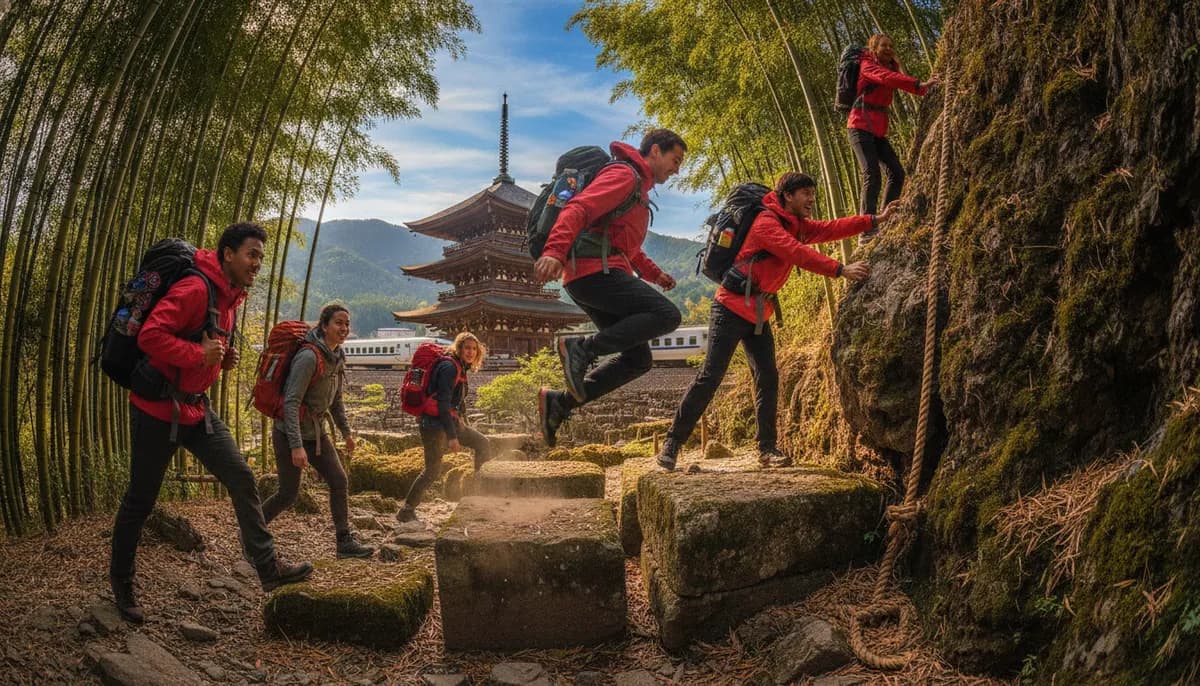
Tokyo, Kyoto, Alps & Fuji — Self-Launched Solo Circuit
8 days · Japan (Honshu)
Europamundo charges £2,230
No-markup version: ~£855 per person
Estimate only, not a guaranteed price. Always verify costs independently before booking.
A self-launched take on Europamundo's 8-day "Tokyo, Kyoto, Alps and Fuji" coach circuit — same loop, same headline sights, but done on your own schedule with hostel dorms, business hotels and one night in a rural onsen ryokan. You'll cover Tokyo's big-hitters, a day trip to Kyoto's shrines on the bullet train, the Nakasendo post town of Tsumago and Matsumoto Castle, Nagano's Zenko-ji and the snow monkeys, the hot-spring towns of Kusatsu and Ikaho, Nikko's UNESCO shrines, Kamakura's Buddha, and a Fuji day around Hakone and Lake Kawaguchiko. Key swaps: JR trains and highway buses instead of a tour coach, self-booked walking tours and temples instead of a guide, and — crucially — a Japan Rail Pass plus a night bus option to keep the transport bill down. Costs are backpacker/budget-traveller estimates in GBP; Japan is not a cheap country, so budget rather than expect Southeast Asia prices.
Day-by-day
Land in Tokyo — ease in around Asakusa
Tokyo
Arrive at Narita or Haneda and get straight onto the train: Keisei Skyliner from Narita to Ueno is about £12 (40 mins), or the Keikyu line from Haneda to Asakusa around £3. Check into a hostel or capsule-friendly business hotel in Asakusa or Ueno — Asakusa is the best base for a first night, with the temple on your doorstep and easy access to both airports. Spend the late afternoon wandering Sensoji Temple and Nakamise Street once the day-trip crowds thin out, grab dinner at a standing soba counter or a ¥1,000 teishoku set, and pick up a Suica/Pasmo IC card at any station machine (£4 deposit, top up as you go). Book your Kyoto shinkansen and any Fuji/Hakone seats tonight — mid-week, off-peak trains are cheapest.
🚌Airport train ~£3-12; Suica card + local trains ~£4
🛏Hostel dorm or budget business hotel in Asakusa/Ueno, ~£25-30
- →Sensoji Temple (free)
- →Nakamise Street walk
- →Asakusa riverside evening stroll
Tokyo's greatest hits on a self-guided loop
Tokyo
Do the Europamundo seven-hour guided day yourself using the metro. Start early at Meiji Shrine (free, arrive by 8am for quiet forest paths), walk down to Harajuku's Takeshita Street, then ride to Shibuya for the Scramble Crossing and the free Shibuya Sky-adjacent viewpoints from the station bridge. After lunch, hit Zojoji Temple with Tokyo Tower behind it (free grounds), then take the metro to Oshiage for the Tokyo Skytree Tembo Deck — book the timed ticket online in advance via Klook or the official Skytree site, ~£14, and go near sunset if you can. Finish with yakitori and a beer in Omoide Yokocho in Shinjuku, which is a far better version of the tour's included restaurant dinner. Skip the paid guided commentary — the free Tokyo Metro app and Google Maps cover it.
🚌Metro day pass ~£4-5
🛏Same Asakusa/Ueno base, ~£25-30
- →Meiji Shrine (free)
- →Shibuya Crossing (free)
- →Zojoji Temple & Tokyo Tower view (free)
- →Tokyo Skytree Tembo Deck ~£14
Bullet train to Kyoto — Fushimi Inari, Kinkakuji and Gion
Kyoto (day trip from Tokyo)
Take an early Hikari or Nozomi shinkansen from Tokyo Station to Kyoto — roughly 2h15m, and around £80-90 one way without a pass (a 7-day JR Pass at about £210 is worth it if you're also doing Nagano, Nikko and Odawara, as this itinerary does). Drop bags in a coin locker at Kyoto Station and head straight to Fushimi Inari Taisha (free, 5 mins on the JR Nara line) — walk at least 30 minutes up past the main gates to escape the crowds. Then bus to Kinkakuji, the Golden Pavilion (£3), and loop back via the Imperial Palace gardens (free). Late afternoon, wander Gion's Hanamikoji and Shirakawa lanes at dusk. If you want a guide for half a day, GetYourGuide does a Fushimi Inari + Gion walking tour from about £30. Sleep in a Kyoto hostel near Kyoto Station or in Gion-adjacent Higashiyama.
🚌Shinkansen Tokyo–Kyoto ~£85 one way (or covered by JR Pass); city buses ~£4
🛏Kyoto hostel dorm or guesthouse, ~£25-30
- →Fushimi Inari Taisha (free)
- →Kinkakuji ~£3
- →Imperial Palace gardens (free)
- →Gion evening walk (free)
Nakasendo post town Tsumago and Matsumoto Castle
Kyoto → Tsumago → Matsumoto → Nagano
This is the tour's long coach day — replicate it by train. From Kyoto take the shinkansen to Nagoya (~35 mins) and the Shinano limited express down the Kiso Valley to Nagiso (~1h20m), then a 10-minute bus or a 40-minute walk to Tsumago-juku. Tsumago is a beautifully preserved Edo-era post town with no cars on the main street — walk the old Nakasendo stretch toward Magome if you have time, and eat lunch at one of the soba shops (£8). Continue by local train from Nagiso up to Matsumoto (~1h45m with a change at Shiojiri) for Matsumoto Castle, the black-and-white 'Crow Castle' — entry about £4, closed Mondays. Finish with the Shinano limited express to Nagano (~50 mins) and check into a cheap business hotel or hostel near Nagano Station.
🚌Trains Kyoto–Nagiso–Matsumoto–Nagano, ~£45-55 (largely covered by JR Pass)
🛏Budget business hotel/hostel near Nagano Station, ~£30
- →Tsumago-juku old town (free)
- →Nakasendo walk (free)
- →Matsumoto Castle ~£4
Zenko-ji, snow monkeys, Kusatsu onsen and a ryokan night
Nagano → Jigokudani → Kusatsu → Ikaho
Start at Zenko-ji, Nagano's 7th-century temple — the morning service and the dark underground 'o-kaidan' passage are free and worth the early start (the Gomakuyo blessing ceremony costs a small donation, ~£5). Then take the Nagano Dentetsu train to Yudanaka (~45 mins) and a bus to Kanbayashi Onsen, from where it's a 30-minute forest walk to Jigokudani Monkey Park (entry ~£5) — the wild snow monkeys bathe in the hot spring year-round, best in winter. Head back to Nagano, then take the Shinano line towards Naganohara-Kusatsuguchi and the JR bus up to Kusatsu (~2h total), one of Japan's most famous onsen towns — the Yubatake hot-water field in the centre and the free open-air foot baths are the highlight. Push on to Ikaho Onsen (~1h by bus/train via Shibukawa) for the night: Ikaho's stone stairway street and the views of the surrounding mountains are lovely at dusk. Splurge slightly on a rural ryokan or onsen hotel here — this replaces the tour's included traditional dinner and is the trip's one comfort night.
🚌Local trains and buses Nagano–Yudanaka–Kusatsu–Ikaho, ~£25
🛏Rural onsen ryokan or Ikaho guesthouse, ~£45-55 (dinner/breakfast often included)
- →Zenko-ji Temple & morning service (free/donation)
- →Jigokudani Monkey Park ~£5
- →Kusatsu Yubatake and free foot baths
- →Ikaho stone stairway (free)
Nikko's shrines and Kanmangafuchi Abyss
Ikaho → Nikko → Tokyo
Travel from Ikaho to Nikko via Shibukawa and Utsunomiya on the JR lines (~2h). Buy the Nikko pass or just pay as you go: bus from Nikko Station to the shrine area is ~£3. Toshogu Shrine, the lavishly gilded UNESCO mausoleum of Tokugawa Ieyasu, is ~£9, and the Taiyuinbyo mausoleum next door is a quieter, darker counterpart (~£5). Walk downhill to the Kanmangafuchi Abyss, a riverside row of stone Jizo statues that's completely free and rarely busy. If you're doing this in autumn, the Irohazaka road and Lake Chuzenji add two hours — otherwise catch the late-afternoon train back to Tokyo (~2h) and check into your Tokyo base for two more nights.
🚌Trains Ikaho–Nikko–Tokyo ~£28 (JR Pass covers most)
🛏Asakusa/Ueno hostel or budget hotel, ~£25-30
- →Nikko Toshogu Shrine ~£9
- →Taiyuinbyo Mausoleum ~£5
- →Kanmangafuchi Abyss (free)
Kamakura Buddha, Enoshima and an Odawara onsen night
Tokyo → Kamakura → Enoshima → Odawara
Take the JR Yokosuka line from Tokyo to Kita-Kamakura (~1h, ~£8). Walk the Daibutsu hiking trail (about 1 hour, free) between the Zen temples — Hokoku-ji's bamboo grove with matcha in the tea house is ~£6 combined and a highlight, and Sugimoto-dera (founded 734) is free. Continue to Hase for the Great Buddha of Kamakura (£2) and then the Enoshima Electric Railway to Enoshima island (~£3) — cross the Benten bridge, walk the island path and take the Sea Candle observation tower if the weather's clear (~£5). Finish with the JR Tokaido line to Odawara (~30 mins), where you sleep near the station or up at Hakone-Yumoto. Odawara Castle is free to walk the grounds (keep is ~£3).
🚌JR trains Tokyo–Kamakura–Enoshima–Odawara, ~£15
🛏Odawara or Hakone-Yumoto budget hotel/guesthouse, ~£30-35
- →Daibutsu hiking trail (free)
- →Hokoku-ji bamboo grove + matcha ~£6
- →Great Buddha ~£2
- →Enoshima island & Sea Candle ~£5
Hakone's Valley of Hell, Lake Kawaguchiko and Mount Fuji's fifth station
Odawara → Hakone → Lake Kawaguchiko → Tokyo
Buy the Hakone Freepass (~£40, covers the ropeway, pirate ship and buses) or pay per leg. From Hakone-Yumoto take the mountain railway and cable car up to Owakudani, the sulphurous 'Valley of Hell' — eat a black egg if you dare and get your first Fuji view on a clear day. Continue by the Hakone ropeway to Lake Ashi and take the sightseeing boat across (£12), then bus to Gotemba and onward to Kawaguchiko (~1h30m). At Kawaguchiko, do the self-bookable lake cruise (~£8) and visit Oshino Hakkai's spring ponds (free) by local bus. If you want the Fifth Station, take the Fuji Subaru Line bus from Kawaguchiko Station to the 2,305m fifth station (~£12 return, seasonal — check road opening dates). Then take the Fujikyuko highway bus or train back to Tokyo (~2h, ~£15) — or stay the night at a Kawaguchiko hostel if you'd rather catch sunrise on Fuji before heading home.
🚌Hakone Freepass ~£40 + buses to Kawaguchiko and Tokyo ~£25
🛏None included (or optional extra Kawaguchiko hostel, ~£25)
- →Owakudani (free with Freepass)
- →Lake Ashi boat ~£12
- →Oshino Hakkai (free)
- →Kawaguchiko lake cruise ~£8
- →Fuji Fifth Station bus ~£12
Self-launched vs. Europamundo
| This itinerary (self-launched) | Europamundo | |
|---|---|---|
| Price per person | ~£855 | £2,230 |
| Duration | 8 days | 8 days |
| Who books it | You and your group, direct | Tour operator, guided group |
| Savings | £1,375 per person (62%) | |
Estimate only, not a guaranteed price. Always verify costs independently before booking.
Want to see more Europamundo-style trips? Check them out here.~£855
estimated per person
You never pay Travel Crew for this — you pay hostels, transport, and activity providers directly, the same as if you'd booked it all yourself.
This publishes your dates so other travellers can find and join you — no tour operator needed.
Customise with Tour BusterCreated by

Travel Crew
0 trips
Frequently asked questions
How much does Tokyo, Kyoto, Alps & Fuji — Self-Launched Solo Circuit cost?+
Doing it yourself with this self-launched itinerary costs an estimated £855 per person for 8 days in Japan (Honshu). This is an AI-generated estimate based on typical budget-traveller prices — actual costs will vary by season and how you book.
Is this cheaper than booking with Europamundo?+
Yes — Europamundo charges around £2,230 per person for a similar tour. Doing the same route independently, using the same standard of accommodation and activities, costs an estimated £855 — a saving of roughly £1,375 (62%) per person.
How long is the Japan (Honshu) trip?+
This itinerary runs 8 days, covering 8 day-by-day stops through Japan (Honshu).
How do I join this trip?+
You can join an existing open departure using this itinerary if one is scheduled, or launch your own departure with your own dates and invite other travellers to join you — no tour operator required.
Isn't it easier to just use a tour operator?+
Well, yes, a tour operator will book all the individual parts of your travel for you and provide a guide. That's obvious, but doing this has the potential to save the group thousands, which can in turn improve your itinerary substantially or save you huge amounts of money. Also, when you launch a departure, Travel Crew has tools in place to help you book the individual sections of the trip or make it easier for you to do this as a group. Really, you do not need a middle man. If you are more comfortable paying more and using a middle man, then you should certainly do this.
Is it safer to book through a tour operator?+
Arguably, there isn't much difference. A self-launched trip runs on the same principle as a group travel crew: collective responsibility, everyone looking out for each other, the same way it would if a group of friends organised the trip themselves — because that's exactly what's happening. You should always take out travel insurance before you go, self-launched or not; that doesn't change either way. Every open departure is published publicly with real dates and a real trip organiser, so it's never an anonymous arrangement, and our support team is reachable any time you need help, including in an emergency while you're away. Longer-term, we're building direct relationships with ground DMCs in popular destinations, offered as an optional paid add-on for extra on-the-ground support. Ultimately, though, the group is responsible for its own conduct and safety on a self-launched trip, same as on any trip you plan yourself.
What kind of trip is this?+
This is a culture, adventure, hiking trip through Japan (Honshu), self-launched rather than run by a tour operator — you organise it with a group you find or bring yourself.
Would you like to name the operator, name the trip, or have any suggestions about how to improve this itinerary?
Drop your comment below — if you've done a similar route, tell us what worked, what you'd add, or what you'd skip.
No comments yet — be the first to share your take.
Sign in to leave a comment.