
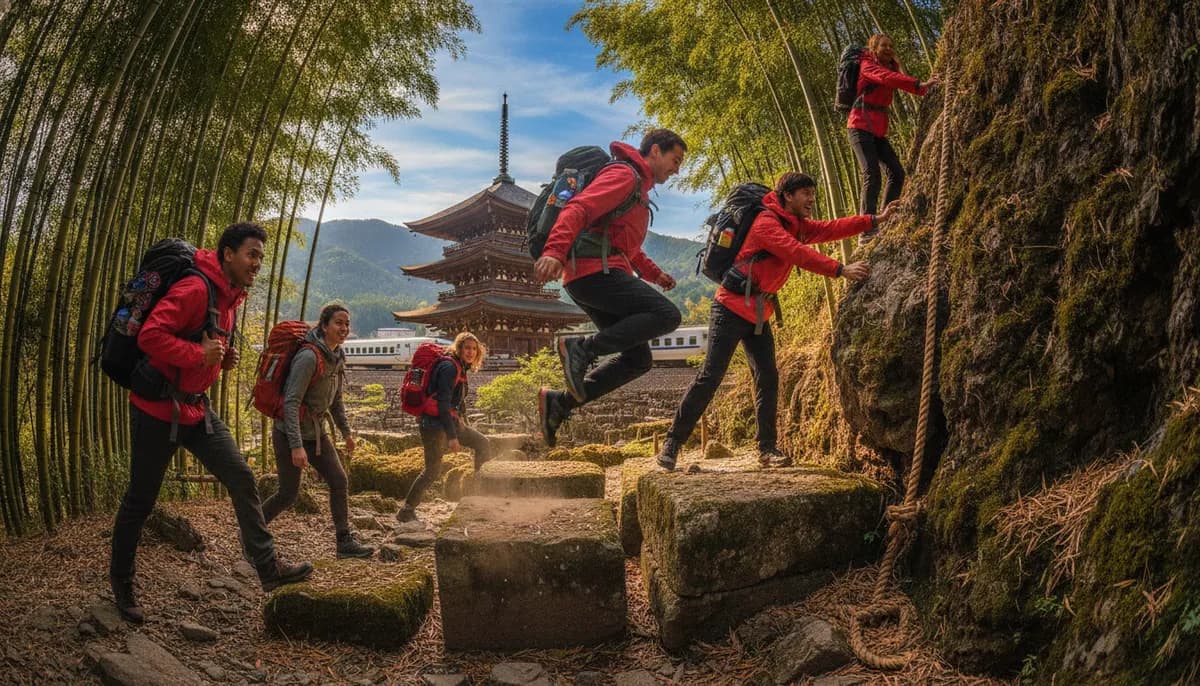
Contrasts of Japan: Tokyo to Hiroshima (Self-Launched)
10 days · Japan (Honshu)
Europamundo charges £2,200
No-markup version: ~£1,180 per person
Estimate only, not a guaranteed price. Always verify costs independently before booking.
A self-launched version of Europamundo's 10-day "Contrasts of Japan end Tokyo" coach tour, rebuilding the same loop — Tokyo, Mount Fuji & Kawaguchiko, Kyoto, Nara, Osaka, Himeji, Okayama, Kurashiki, Miyajima and Hiroshima — using hostels, guesthouses and budget business hotels plus the excellent Japan Rail network, local buses and ferries. You'll hit the same headline sights (Tokyo Skytree, Fushimi Inari, Kinkakuji, Todaiji, Himeji Castle, Itsukushima Shrine, the Peace Memorial Museum) at your own pace and for roughly a third of the group tour price. Costs are approximate per person, based on a mix of hostel dorms and private budget rooms; the big swap is a 7-day Japan Rail Pass or point-to-point shinkansen tickets instead of a coach and guide.
Day-by-day
Arrive in Tokyo
Tokyo
Land at Narita or Haneda and get your Suica/Pasmo IC card at the airport train station (¥500 deposit, top up ¥3,000). Take the Keisei Skyliner or Narita Express into the city, or the cheaper limousine bus. Check into a hostel or budget business hotel in Asakusa, Ueno or Taito — these areas are far better value than Shinagawa and put you next to Sensoji. Evening wander to a local izakaya or konbini dinner and get an early night.
🚌Airport train or limousine bus into Tokyo, ~£12-18; walk/metro locally
🛏Hostel dorm or budget business hotel, Asakusa/Ueno (approx. £22)
- →Settle in, IC card setup
- →Evening walk in Asakusa
- →Konbini/izakaya dinner
Tokyo highlights by metro
Tokyo
Self-launch the guided city tour using the metro. Start early at Meiji Shrine (free, Harajuku), then walk to Shibuya Crossing and up Shibuya Sky or a free rooftop for the view. Head to Zojoji Temple with Tokyo Tower behind it, then east to Sensoji Temple and Nakamise Street in Asakusa. Late afternoon take the metro to Tokyo Skytree and buy the Tembo Deck ticket (¥2,100) — or save money and view it from the Sumida riverside. Finish in Shinjuku for the free Metropolitan Government Building observation deck and dinner in Omoide Yokocho.
🚌Tokyo Metro 24-hour pass ~£4.50
🛏Hostel dorm or budget business hotel, Asakusa/Ueno (approx. £22)
- →Meiji Shrine (free)
- →Shibuya Crossing
- →Zojoji Temple
- →Sensoji Temple & Nakamise Street
- →Tokyo Skytree Tembo Deck ~£11
- →Shinjuku observation deck (free)
Mount Fuji and Lake Kawaguchiko
Kawaguchiko
Book a highway bus from Shinjuku Expressway Bus Terminal (Busta Shinjuku) to Kawaguchiko Station — about 2 hours, ¥2,000-2,200. Drop bags at a guesthouse, then take the Omni bus or the Fuji Panoramic Ropeway to Arakurayama Sengen Park for the five-storey Chureito Pagoda and Fuji view. Visit Fuji Sengen Shrine, then hire a pedal boat or take the sightseeing boat on Lake Kawaguchiko. Note: the Fuji Subaru Line to the Fifth Station is closed to private vehicles in season and only reachable by shuttle bus/tour in summer — check the Kawaguchiko tourist office and skip it if the schedule doesn't fit; Fujiyoshida and the lakeside give better views anyway.
🚌Highway bus Shinjuku-Kawaguchiko ~£11 each way; local Omni bus day pass ~£8
🛏Guesthouse or hostel in Kawaguchiko/Fujiyoshida (approx. £28)
- →Arakurayama Sengen Park / Chureito Pagoda
- →Fuji Sengen Shrine
- →Lake Kawaguchiko boat ride ~£8
Iyashi no Sato, Shiraito Falls and on to Kyoto
Kyoto
Hire a bike or use the local bus to Iyashi no Sato Nenba, the reconstructed thatched-roof village on Lake Saiko (entry ¥500) — about 40 minutes by bus from Kawaguchiko. Stop at Shiraito Falls on the Fuji side, then bus back to Kawaguchiko and take the highway bus or train via Mishima to Kyoto (allow 4-5 hours; the Mishima-Kyoto shinkansen is the fastest option at roughly ¥11,000, or a night bus is cheaper). Check into a hostel or guesthouse in Kyoto's Gion/Higashiyama or Kyoto Station area. Optional Toyota Museum stop if you're a car fan — it's near Nagoya, easiest combined with a Nagoya train break.
🚌Local buses to Saiko ~£5; Kawaguchiko-Mishima train ~£10; Mishima-Kyoto shinkansen ~£55 (or night bus ~£30)
🛏Hostel dorm or guesthouse, Kyoto (approx. £25)
- →Iyashi no Sato Nenba village (¥500)
- →Shiraito Falls
- →Evening stroll by the Kamo River
Kyoto: Arashiyama, Fushimi Inari and the Golden Pavilion
Kyoto
Do the classic circuit independently. Take the Randen tram or JR line to Arashiyama for Togetsukyo Bridge, then walk into Tenryuji Temple (¥500) and straight out its back gate into the bamboo grove — go before 8am to dodge crowds. Bus or train to Fushimi Inari Taisha (free, open 24h) and walk at least to the Yotsutsuji intersection. Then catch a bus to Kinkakuji (¥500) and stroll through the Kyoto Imperial Palace gardens (free) on the way back. Evening in Gion hunting for lantern-lit lanes and a cheap standing sushi or ramen bar.
🚌Kyoto bus/train day of travel ~£8; consider a 1-day bus pass ~£5
🛏Hostel dorm or guesthouse, Kyoto (approx. £25)
- →Togetsukyo Bridge
- →Tenryuji Temple ~£2.50
- →Arashiyama bamboo forest
- →Fushimi Inari Shrine (free)
- →Kinkakuji ~£2.50
- →Imperial Palace gardens (free)
- →Gion evening walk
Nara day trip, then Osaka
Osaka
Train to Nara (JR Miyakojima or Kintetsu line, ~45 min, £5-7). Walk to Todaiji Temple (¥800) and feed the deer in Nara Park, then take the bus to Horyuji (¥1,500 combined entry; it's the world's oldest wooden temple complex and worth the extra trip). Cheap lunch from a Nara market stall or a set-menu teishoku. Late afternoon continue by Kintetsu line to Osaka Namba (~40 min, £5) and check into a hostel in Namba or Shinsaibashi. Spend the evening in Dotonbori — takoyaki, kushikatsu and the Glico sign.
🚌Kyoto-Nara ~£6; Nara-Osaka ~£5; local buses ~£3
🛏Hostel dorm in Namba/Shinsaibashi, Osaka (approx. £22)
- →Todaiji Temple ~£4
- →Nara Park deer
- →Horyuji Temple ~£8
- →Dotonbori evening
Himeji Castle and Korakuen Garden, on to Okayama
Okayama
Take the shinkansen or JR Special Rapid from Osaka to Himeji (~1 hour, £15 by shinkansen or £10 by rapid). Himeji Castle opens at 9am — buy the combined castle + Koko-en garden ticket (¥1,050) and get there at opening to beat the queues. Lunch at a Himeji spot near the station (try the local oden or a cheap teishoku). Continue west to Okayama (~25 min by shinkansen, £12), check into a budget hotel and walk 15 minutes to Korakuen Garden (¥410) — one of Japan's top three gardens. Optional: Okayama Castle interior (¥580) next door.
🚌Osaka-Himeji ~£12; Himeji-Okayama ~£12; local buses/walk
🛏Budget business hotel or guesthouse, Okayama (approx. £30)
- →Himeji Castle and Koko-en combined ticket ~£6
- →Korakuen Garden ~£2.50
- →Optional Okayama Castle ~£3
Kurashiki, Miyajima and Hiroshima
Hiroshima
Morning train from Okayama to Kurashiki (~20 min, £4) for the canal-lined historic Bikan quarter — whitewashed merchant warehouses, free to wander. Back to Okayama, then shinkansen to Hiroshima (~40 min, £25). Drop bags at a hostel in the Peace Park area, then take the JR Sanyo line to Miyajimaguchi (~25 min) and the JR ferry to Miyajima (ferry included in JR Pass, otherwise £2). Visit Itsukushima Shrine (¥300) — check tide times so you see it 'floating' at high tide — and eat a cheap momiji manju and grilled oyster lunch in the town centre. Return to Hiroshima for the evening; okonomiyaki at a counter in Okonomi-mura is the must-do (£7).
🚌Okayama-Kurashiki ~£4; Okayama-Hiroshima shinkansen ~£25; JR to Miyajimaguchi and ferry ~£5
🛏Hostel dorm or budget hotel near Peace Park, Hiroshima (approx. £25)
- →Kurashiki Bikan quarter (free)
- →Itsukushima Shrine ~£2
- →Miyajima town and food stalls
- →Okonomi-mura dinner
Hiroshima Peace Memorial, then back to Tokyo
Tokyo
Start with the Peace Memorial Museum (¥200) at opening — allow 2 hours, it's heavy and essential. Walk the Peace Memorial Park and the Atomic Bomb Dome, both free. Afternoon shinkansen back to Tokyo (Hiroshima-Tokyo, Nozomi ~4 hours, ¥19,000 / £100 — this is where a 7-day JR Pass bought in advance can pay off if you've been riding JR all week). Check into a hostel in Asakusa or Ueno and have a relaxed final evening.
🚌Hiroshima-Tokyo shinkansen ~£100 (or JR Pass)
🛏Hostel dorm or budget business hotel, Asakusa/Ueno (approx. £22)
- →Peace Memorial Museum ~£1
- →Peace Memorial Park and Atomic Bomb Dome (free)
Depart Tokyo
Tokyo
Last morning for a Tokyo revisit — a cheap breakfast in a kissaten, a final wander round Ueno's Ameyoko market for souvenirs, or a quick stop at Akihabara or Ginza if you have time before your flight. Airport train or bus out (allow 3 hours before an international flight).
🚌Airport train or limousine bus ~£12-18
🛏None (departure day)
- →Ameyoko market
- →Optional Akihabara or Ginza
Self-launched vs. Europamundo
| This itinerary (self-launched) | Europamundo | |
|---|---|---|
| Price per person | ~£1,180 | £2,200 |
| Duration | 10 days | 10 days |
| Who books it | You and your group, direct | Tour operator, guided group |
| Savings | £1,020 per person (46%) | |
Estimate only, not a guaranteed price. Always verify costs independently before booking.
Want to see more Europamundo-style trips? Check them out here.~£1,180
estimated per person
You never pay Travel Crew for this — you pay hostels, transport, and activity providers directly, the same as if you'd booked it all yourself.
This publishes your dates so other travellers can find and join you — no tour operator needed.
Customise with Tour BusterCreated by

Travel Crew
0 trips
Frequently asked questions
How much does Contrasts of Japan: Tokyo to Hiroshima (Self-Launched) cost?+
Doing it yourself with this self-launched itinerary costs an estimated £1,180 per person for 10 days in Japan (Honshu). This is an AI-generated estimate based on typical budget-traveller prices — actual costs will vary by season and how you book.
Is this cheaper than booking with Europamundo?+
Yes — Europamundo charges around £2,200 per person for a similar tour. Doing the same route independently, using the same standard of accommodation and activities, costs an estimated £1,180 — a saving of roughly £1,020 (46%) per person.
How long is the Japan (Honshu) trip?+
This itinerary runs 10 days, covering 10 day-by-day stops through Japan (Honshu).
How do I join this trip?+
You can join an existing open departure using this itinerary if one is scheduled, or launch your own departure with your own dates and invite other travellers to join you — no tour operator required.
Isn't it easier to just use a tour operator?+
Well, yes, a tour operator will book all the individual parts of your travel for you and provide a guide. That's obvious, but doing this has the potential to save the group thousands, which can in turn improve your itinerary substantially or save you huge amounts of money. Also, when you launch a departure, Travel Crew has tools in place to help you book the individual sections of the trip or make it easier for you to do this as a group. Really, you do not need a middle man. If you are more comfortable paying more and using a middle man, then you should certainly do this.
Is it safer to book through a tour operator?+
Arguably, there isn't much difference. A self-launched trip runs on the same principle as a group travel crew: collective responsibility, everyone looking out for each other, the same way it would if a group of friends organised the trip themselves — because that's exactly what's happening. You should always take out travel insurance before you go, self-launched or not; that doesn't change either way. Every open departure is published publicly with real dates and a real trip organiser, so it's never an anonymous arrangement, and our support team is reachable any time you need help, including in an emergency while you're away. Longer-term, we're building direct relationships with ground DMCs in popular destinations, offered as an optional paid add-on for extra on-the-ground support. Ultimately, though, the group is responsible for its own conduct and safety on a self-launched trip, same as on any trip you plan yourself.
What kind of trip is this?+
This is a culture, city-breaks, foodie trip through Japan (Honshu), self-launched rather than run by a tour operator — you organise it with a group you find or bring yourself.
Would you like to name the operator, name the trip, or have any suggestions about how to improve this itinerary?
Drop your comment below — if you've done a similar route, tell us what worked, what you'd add, or what you'd skip.
No comments yet — be the first to share your take.
Sign in to leave a comment.