
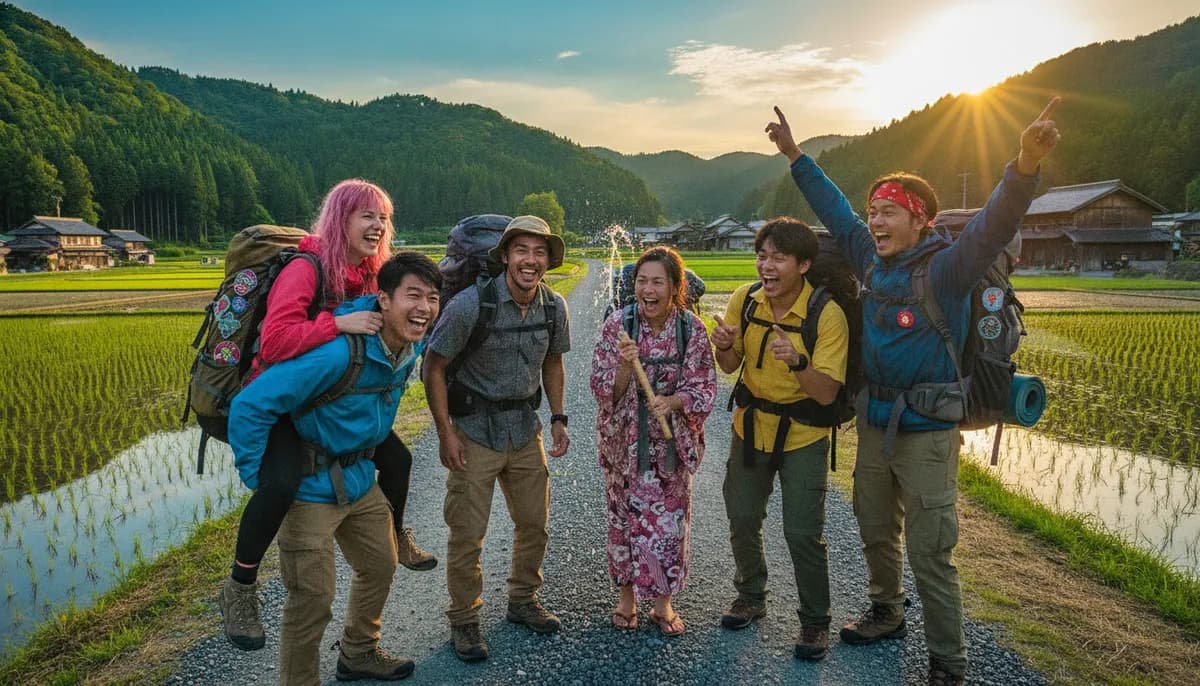
Golden Route & Ancient Japan — Self-Launched
14 days · Japan
DIAMIR Erlebnisreisen charges £3,800
No-markup version: ~£810 per person
Estimate only, not a guaranteed price. Always verify costs independently before booking.
A self-launched version of DIAMIR's 14-day "Golden Route" through Kyoto, Nara, Nagoya, the Kiso Valley, Matsumoto, Minobu and Tokyo — done independently by train, with hostel/guesthouse stays and self-bookable temple, onsen and craft experiences. You'll cover the same headline sights (Fushimi Inari, Kinkakuji, Nakasendo walk between Magome and Tsumago, Matsumoto Castle, Kuonji Temple, Fuji viewpoints, Asakusa and Shibuya) but at your own pace, with no guide hurrying you from station to station. Costs are rough per-person estimates for a budget-to-mid backpacker travelling in spring/autumn shoulder season, excluding international flights.
Day-by-day
Arrive Osaka — transfer to Kyoto
Kyoto
Fly into Osaka Kansai (KIX) rather than Itami if you're coming from Europe — it's the cheaper arrival point. From KIX take the Haruka express train direct to Kyoto Station (about 75 min, ~£18 with an ICOCA & Haruka package) or the limousine bus (~£11). Check into a hostel or budget guesthouse near Kyoto Station or in Gion/Gojo. Spend the evening wandering your neighbourhood and eating at a local izakaya — order a handful of small plates the way the tour's welcome dinner does, for a fraction of the price.
🚌Haruka express train KIX–Kyoto ~£18 (or limousine bus ~£11)
🛏Budget hostel or guesthouse near Kyoto Station (~£18-25/night dorm or private single)
- →Arrive Osaka Kansai airport
- →Haruka express train to Kyoto
- →Evening izakaya dinner in central Kyoto
Arashiyama, Tenryuji and Kinkakuji
Kyoto
Start early at Arashiyama Bamboo Grove (free, best before 8am) and walk 5 minutes to Tenryuji Temple, whose UNESCO garden is one of Kyoto's finest (~£4 entry). Cross the Togetsukyo bridge, then take the JR Sagano line back into town and bus to Kinkakuji, the Golden Pavilion (~£3). In the afternoon continue to Ryoanji or Nijo-jo Castle (~£8, with its famous nightingale floors and wall paintings) — the castle closes around 5pm so leave time. A one-day Kyoto bus pass (~£4) covers most of this.
🚌JR Sagano line + Kyoto city bus day pass ~£4
🛏Budget hostel or guesthouse in Kyoto
- →Arashiyama Bamboo Grove (free, early morning)
- →Tenryuji Temple and UNESCO garden ~£4
- →Kinkakuji Golden Pavilion ~£3
- →Nijo-jo Castle with nightingale floors ~£8
Zen meditation, tea ceremony and Higashiyama
Kyoto
Book a morning zazen meditation session with a monk at a Kyoto temple (several temples and small centres offer 1-2 hour sessions for tourists, roughly £20-30; book via GetYourGuide or directly with the temple a few days ahead). Follow it with a matcha tea ceremony — Shofuso or En in Gion run short ceremonies from ~£25. Then spend the afternoon walking the stone lanes of Ninen-zaka and Sannen-zaka up to Kiyomizu-dera Temple (~£3), and loop through the Higashiyama historic district at golden hour. Dinner in Gion or Pontocho alley.
🚌City bus/walk ~£3
🛏Budget hostel or guesthouse in Kyoto
- →Zazen meditation session with a monk ~£25
- →Matcha tea ceremony in Gion ~£25
- →Ninen-zaka and Sannen-zaka lanes
- →Kiyomizu-dera Temple ~£3
- →Evening stroll in Pontocho alley
Fushimi Inari and day trip to Nara
Kyoto / Nara
Beat the crowds to Fushimi Inari at 7am (free, 5 min on the JR Nara line). Continue south on the Kintetsu line to Nara (~£7, 45 min) and spend the day there: buy deer crackers and meet the sika deer in Nara Park, see the giant bronze Buddha at Todaiji (~£4), and wander the stone lanterns of Kasuga Taisha. Return to Kyoto in the evening. If you have energy, the Osaka day-trip alternative is a 30-minute train from Kyoto.
🚌JR Nara line + Kintetsu Kyoto–Nara return ~£14
🛏Budget hostel or guesthouse in Kyoto
- →Fushimi Inari vermilion gates (free, early)
- →Nara Park sika deer
- →Todaiji Temple Great Buddha ~£4
- →Kasuga Taisha stone lanterns ~£4
Kyoto craft workshop and Shinkansen to Nagoya
Kyoto to Nagoya
Morning calligraphy or ikebana workshop in central Kyoto — short introductory classes run from ~£20-30 and can be booked directly. Grab an ekiben (station bento, ~£6) at Kyoto Station and ride the Shinkansen to Nagoya (about 35 min, ~£28 unreserved — book on Klook or at the ticket office). Check into a capsule hotel or hostel near Nagoya Station (capsule hotels here are excellent value, ~£20). In the evening explore the Osu shopping and nightlife district and graze its street food — miso kushikatsu, tebasaki wings, anmitsu.
🚌Shinkansen Hikari/Kodama Kyoto–Nagoya ~£28
🛏Capsule hotel or hostel near Nagoya Station (~£20-28)
- →Japanese calligraphy or ikebana workshop ~£25
- →Shinkansen Kyoto–Nagoya
- →Ekiben at Kyoto Station
- →Osu district street food evening
Nagoya museums and samurai heritage
Nagoya
A cultural day in Nagoya: the Tokugawa Art Museum and its stroll garden (~£8 combined), the Tokugawaen garden next door, and the reconstructed Samurai Prince's Palace within the grounds. Follow with the Toyota Commemorative Museum of Industry and Technology (~£3) if you have any interest in how Japan industrialised. Alternative for a lighter day: Nagashima Resort or the SCMaglev railway park. Eat Nagoya's signature hitsumabushi eel or miso nikomi udon for dinner.
🚌Subway day pass ~£5
🛏Capsule hotel or hostel in Nagoya
- →Tokugawa Art Museum and garden ~£8
- →Samurai Prince's Palace
- →Toyota Commemorative Museum ~£3
- →Local Nagoya food (hitsumabushi, miso nikomi udon)
Train to the Kiso Valley — Nakasendo walk
Magome / Tsumago to Kiso Valley
Take the Shinano limited express from Nagoya to Nakatsugawa (~£18, about 50 min), then a local bus or taxi to Magome (~£4). Walk the historic Nakasendo trade route between Magome and Tsumago — 8 km, 2.5-3 hours of gentle uphill then downhill through cedar forest and old post towns, with free luggage forwarding between the towns if you ask at the tourist office. Stay in a budget minshuku or ryokan in Tsumago or Nagiso (expect ~£40-55 with breakfast) and soak in an onsen in the evening. If you want the full ryokan kaiseki experience, book a half-board plan (~£70-90).
🚌Shinano limited express ~£18 + local bus ~£4
🛏Minshuku or budget ryokan in Tsumago/Nagiso (~£40-55, breakfast included)
- →Shinano express Nagoya–Nakatsugawa
- →Nakasendo walk Magome to Tsumago (8 km)
- →Free luggage forwarding between post towns
- →Onsen soak at minshuku/ryokan
Kiso Valley heritage sites and train to Matsumoto
Kiso Valley to Matsumoto
Visit the Fukushima Sekisho Museum (the Edo-era barrier checkpoint, ~£3), the Yamamura samurai residence nearby (~£3), and Kozenji Temple with its dry landscape garden (~£3). From Nagiso or Kiso-Fukushima, take the local JR line and then the Shinano express to Matsumoto (~£20 total, 2 hours). Check into a guesthouse or hostel near Matsumoto Station (~£25-35) and walk the lively Nakamachi street of old kura storehouses in the evening.
🚌Local JR line + Shinano express to Matsumoto ~£20
🛏Guesthouse or hostel in Matsumoto (~£25-35)
- →Fukushima Sekisho Museum ~£3
- →Yamamura samurai residence ~£3
- →Kozenji Temple and garden ~£3
- →Evening walk in Nakamachi kura district
Matsumoto Castle and Kusama exhibition
Matsumoto
Matsumoto Castle, one of Japan's few original-feel black-and-white keeps, opens at 8:30 — get there early (~£6). Then spend an hour at the Matsumoto City Museum of Art, which holds a permanent Yayoi Kusama gallery (she's a Matsumoto native; ~£4). Afternoon options: the Japan Ukiyo-e Museum out of town, or a walk along the Metoba river. Book your onward bus to Minobu this evening at the tourist office or via highway bus sites.
🚌Local walking/bus ~£3
🛏Guesthouse or hostel in Matsumoto
- →Matsumoto Castle ~£6
- →Yayoi Kusama collection at Matsumoto City Museum of Art ~£4
- →Afternoon riverside walk or Ukiyo-e Museum
Matsumoto to Minobu — temple lodge stay
Minobu
Travel by local JR line to Kofu and then on to Minobu (~£14, roughly 2.5 hours), or a highway bus from Matsumoto to Kofu and train onward. From Minobu Station take the Minobu railway and ropeway up to Kuonji Temple, head temple of the Nichiren sect on Mount Minobu. Book a night at a temple lodge (shukubo) such as Kakurinbo — roughly £45-70 per person including the shojin ryori vegetarian dinner and morning prayers, often bookable directly or through Japanese Guest Houses. Spend the afternoon walking the temple grounds and the 287-step stone staircase through cedar forest.
🚌Local JR + Minobu railway ~£14
🛏Temple lodge (shukubo) at Kuonji Temple (~£45-70 with dinner and breakfast)
- →JR line and Minobu railway to Mount Minobu
- →Kuonji Temple and 287-step staircase
- →Shukubo temple lodge stay with shojin ryori dinner
- →Optional early morning Buddhist service (around 5am)
Mount Fuji viewpoints — Kawaguchiko to Tokyo
Kawaguchiko to Tokyo
Attend the 5am morning service if you're up for it, then head down to Fuji Station or Shin-Fuji and travel to Kawaguchiko by local bus or train (~£12). Walk Oishi Park on the lakeshore for Fuji views, visit Iyashi no Sato open-air village (~£3), and hike the 400 steps up to Chureito Pagoda at Arakura Sengen Shrine for the classic Fuji-and-pagoda shot (~£0, free). Skip the tourist-info centre if time is tight. Continue to Tokyo by highway bus from Kawaguchiko (~£10, 2 hours) and check into a hostel in Asakusa or Shinjuku (~£22-30 dorm).
🚌Local bus/train to Kawaguchiko ~£12 + highway bus to Tokyo ~£10
🛏Hostel in Asakusa or Shinjuku (~£22-30 dorm)
- →Morning service at Kuonji Temple (optional)
- →Oishi Park Lake Kawaguchiko viewpoint
- →Iyashi no Sato open-air museum ~£3
- →Chureito Pagoda hike at Arakura Sengen Shrine
- →Highway bus to Tokyo
Asakusa and Shibuya
Tokyo
Start at Hamarikyu Garden for green tea at Nakajima-no-ochaya teahouse over the water (~£3 entry + ~£5 tea set). Then head to Asakusa: Senso-ji Temple, Kaminarimon Thunder Gate and Nakamise-dori shopping street are all free. In the late afternoon move to Shibuya for the Hachiko statue and the Scramble Crossing — the Shibuya Sky observation deck (~£15, book ahead) or the free Tokyo Metropolitan Government Building deck are both good sunset options.
🚌Tokyo Metro day pass ~£5
🛏Hostel in Asakusa or Shinjuku
- →Hamarikyu Garden with green tea ~£8
- →Senso-ji Temple and Thunder Gate
- →Nakamise-dori street food
- →Hachiko statue and Shibuya Scramble Crossing
- →Shubuya Sky or free city hall observation deck
TeamLab, Meiji Shrine and Harajuku
Tokyo
Book teamLab Planets or teamLab Borderless online in advance (~£18-22, timed entry — sells out at weekends). Visit the free Tokyo Metropolitan Government Building observation deck if you skipped it. In the afternoon wander the forested approach to Meiji Jingu Shrine, then explore Harajuku's Takeshita street and the design shops along Omotesando. Finish with dinner in Ebisu or a standing izakaya in Shinjuku's Omoide Yokocho.
🚌Tokyo Metro day pass ~£5
🛏Hostel in Asakusa or Shinjuku
- →teamLab digital museum ~£20 (pre-book)
- →Tokyo Metropolitan Government Building deck (free)
- →Meiji Jingu Shrine
- →Harajuku and Omotesando browsing
- →Omoide Yokocho izakaya evening
Depart Tokyo
Tokyo
Take the Narita Express or Keisei Skyliner to Narita (~£15-18, 40-60 min) or the Keikyu line to Haneda (~£3). If your flight is late, leave bags at a coin locker or hostel and do a last morning coffee-and-market run in Yanaka or Tsukiji Outer Market before heading out.
🚌Airport train ~£15
🛏None (departure day)
- →Airport transfer by Narita Express or Keisei Skyliner
- →Optional last-minute Yanaka or Tsukiji stroll
Self-launched vs. DIAMIR Erlebnisreisen
| This itinerary (self-launched) | DIAMIR Erlebnisreisen | |
|---|---|---|
| Price per person | ~£810 | £3,800 |
| Duration | 14 days | 14 days |
| Who books it | You and your group, direct | Tour operator, guided group |
| Savings | £2,990 per person (79%) | |
Estimate only, not a guaranteed price. Always verify costs independently before booking.
Want to see more DIAMIR Erlebnisreisen-style trips? Check them out here.~£810
estimated per person
You never pay Travel Crew for this — you pay hostels, transport, and activity providers directly, the same as if you'd booked it all yourself.
This publishes your dates so other travellers can find and join you — no tour operator needed.
Customise with Tour BusterCreated by

Travel Crew
0 trips
Frequently asked questions
How much does Golden Route & Ancient Japan — Self-Launched cost?+
Doing it yourself with this self-launched itinerary costs an estimated £810 per person for 14 days in Japan. This is an AI-generated estimate based on typical budget-traveller prices — actual costs will vary by season and how you book.
Is this cheaper than booking with DIAMIR Erlebnisreisen?+
Yes — DIAMIR Erlebnisreisen charges around £3,800 per person for a similar tour. Doing the same route independently, using the same standard of accommodation and activities, costs an estimated £810 — a saving of roughly £2,990 (79%) per person.
How long is the Japan trip?+
This itinerary runs 14 days, covering 14 day-by-day stops through Japan.
How do I join this trip?+
You can join an existing open departure using this itinerary if one is scheduled, or launch your own departure with your own dates and invite other travellers to join you — no tour operator required.
Isn't it easier to just use a tour operator?+
Well, yes, a tour operator will book all the individual parts of your travel for you and provide a guide. That's obvious, but doing this has the potential to save the group thousands, which can in turn improve your itinerary substantially or save you huge amounts of money. Also, when you launch a departure, Travel Crew has tools in place to help you book the individual sections of the trip or make it easier for you to do this as a group. Really, you do not need a middle man. If you are more comfortable paying more and using a middle man, then you should certainly do this.
Is it safer to book through a tour operator?+
Arguably, there isn't much difference. A self-launched trip runs on the same principle as a group travel crew: collective responsibility, everyone looking out for each other, the same way it would if a group of friends organised the trip themselves — because that's exactly what's happening. You should always take out travel insurance before you go, self-launched or not; that doesn't change either way. Every open departure is published publicly with real dates and a real trip organiser, so it's never an anonymous arrangement, and our support team is reachable any time you need help, including in an emergency while you're away. Longer-term, we're building direct relationships with ground DMCs in popular destinations, offered as an optional paid add-on for extra on-the-ground support. Ultimately, though, the group is responsible for its own conduct and safety on a self-launched trip, same as on any trip you plan yourself.
What kind of trip is this?+
This is a culture, slow-travel, foodie trip through Japan, self-launched rather than run by a tour operator — you organise it with a group you find or bring yourself.
Would you like to name the operator, name the trip, or have any suggestions about how to improve this itinerary?
Drop your comment below — if you've done a similar route, tell us what worked, what you'd add, or what you'd skip.
No comments yet — be the first to share your take.
Sign in to leave a comment.