
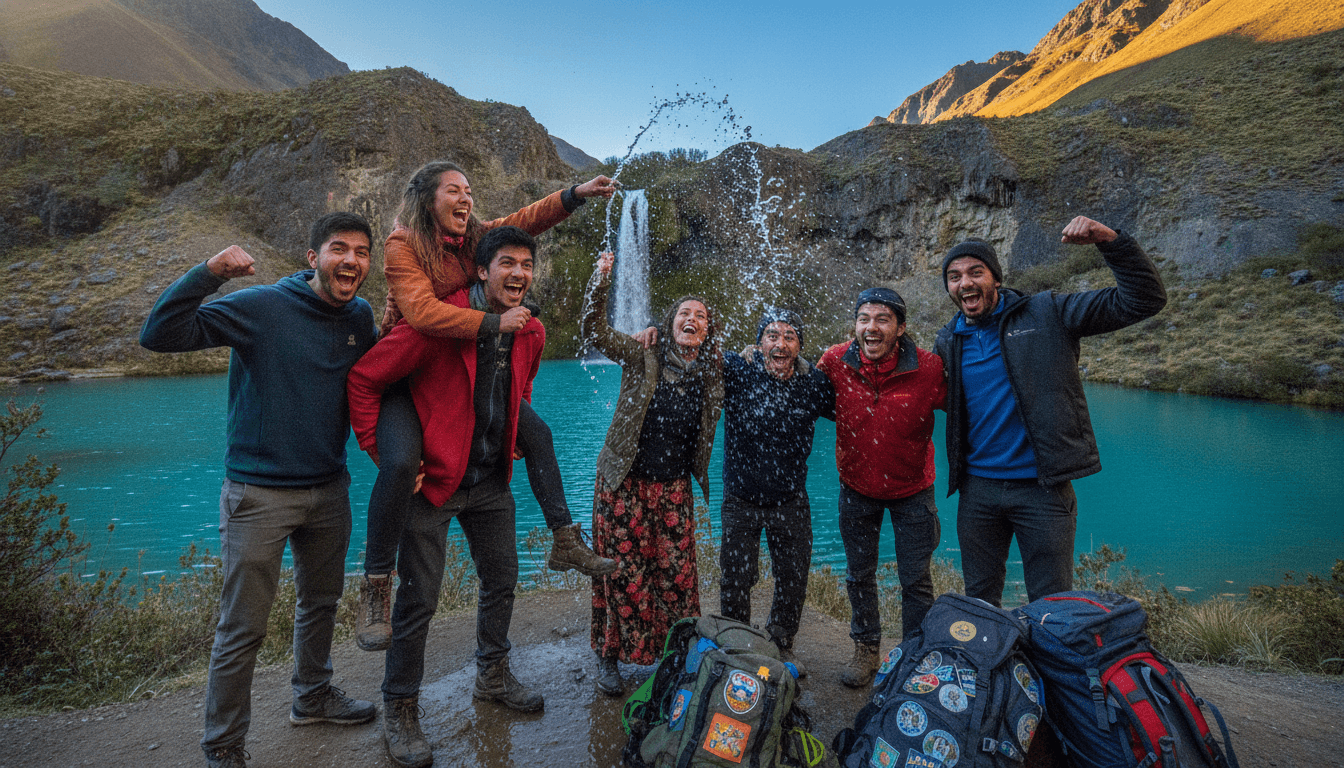
Bolivia Uncovered: Villazón to La Paz Self-Launched Adventure
8 days · Bolivia
Aborigen Tours charges £1,646
No-markup version: ~£645 per person
Estimate only, not a guaranteed price. Always verify costs independently before booking.
An 8-day self-launched version of the classic Villazón–Tupiza–Uyuni–Potosí–Sucre–La Paz–Copacabana route through the Bolivian highlands, done independently using local buses, shared 4x4 salt-flat tours and self-bookable excursions. You'll self-organise the same headline experiences — the Tupiza red-rock canyons, the Uyuni Salt Flats, Potosí's colonial silver-mining history, Sucre's whitewashed streets, La Paz's cable cars and markets, and a Lake Titicaca day trip to Isla del Sol — at a fraction of the escorted operator price. Note: almost the entire route sits between 3,400 and 4,000 m, so pace yourself, hydrate and expect freezing altiplano nights. Prices are approximate, per person, in GBP.
Day-by-day
Villazón to Tupiza — Red Rock Canyons
Tupiza
Cross the Argentina–Bolivia border at La Quiaca/Villazón (have your exit/entry stamps and a few bolivianos ready). From Villazón take a shared taxi or a local bus the ~2-hour stretch to Tupiza (Bs.15–30 / ~£2–4). Check into a budget hostal near the plaza, then spend the afternoon exploring the surrounding Quebrada de Palmira: the Puerta del Diablo rock formation, the phallic Valle de los Machos and Cañón del Inca are all reachable on foot or with a cheap local taxi. Canyons here are free; a guided half-day jeep tour through Quebrada Seca and Cañón del Duende runs about £15–20 if you prefer wheels. Acclimatise gently — Tupiza sits around 2,950 m.
🚌Shared taxi/bus Villazón–Tupiza ~£2–4; local taxis for canyon access ~£3–6
🛏Budget hostal in Tupiza (~£10–14/night, dorm or private)
- →Villazón/La Quiaca border crossing
- →Quebrada de Palmira walk
- →Puerta del Diablo
- →Valle de los Machos
- →Cañón del Inca
Tupiza to the Uyuni Salt Flats
Salar de Uyuni / Uyuni
Join a shared 4x4 salt-flat tour (book locally in Tupiza or Uyuni, or via GetYourGuide — around £55–75 for the standard 1- to 3-day format). En route: the Train Cemetery with its rusting 1899 locomotives, the mining town of Pulacayo (Presidential House and mining centre), and Colchani where you learn salt extraction and visit the local museum. Stand on the Salt Blocks, poke your head into the First Salt Hotel (now a museum), and catch the mirror reflections at Playa Blanca if you're lucky with water levels. Note most classic salt-flat tours are multi-day; a 1-day Uyuni-based version covers the salt highlights while an extra night in a salt hotel adds cost.
🚌Shared 4x4 tour vehicle (included in tour fee) from Tupiza/Uyuni
🛏Budget hostal in Uyuni or basic salt hotel (~£14–22/night)
- →Train Cemetery
- →Pulacayo mining town
- →Colchani salt cooperative & museum
- →Salar de Uyuni salt blocks
- →First Salt Hotel museum
- →Playa Blanca
Uyuni to Potosí — Imperial Silver City
Potosí
Take the morning bus or train from Uyuni to Potosí (bus ~£6–9, roughly 4–6 hours). Potosí is one of the highest cities in the world (~4,090 m), so take it easy. Spend the afternoon on a self-guided walk of the colonial centre: the Casa de la Moneda (coin-minting museum, entry ~£3), the Arco de Cobija, San Lorenzo Church, the atmospheric central market, 10 de Noviembre Square and the San Francisco viewpoint overlooking Cerro Rico, the mountain that bankrolled the Spanish Empire. Wander the indigenous barrios on foot.
🚌Uyuni–Potosí bus/train ~£6–9
🛏Budget hostal/hostel in Potosí (~£10–15/night)
- →Casa de la Moneda museum
- →Arco de Cobija
- →San Lorenzo Church
- →Central market
- →San Francisco viewpoint
- →Cerro Rico viewpoint
Potosí to Sucre — Whitewashed Colonial Capital
Sucre
Morning bus to Sucre (~£5–8, about 3 hours, dropping to a much kinder 2,800 m). Sucre is UNESCO-listed and lovely to explore on foot: the House of Liberty museum (independence history), Plaza de la Recoleta viewpoint, the Asur indigenous textile museum, Church of San Lazaro, Santo Domingo Church, and the Treasury Museum at the Convent of San Felipe de Nery. Finish with a stroll through Parque Bolívar. This is the easiest altitude day of the trip — good for a rest and some breathing room.
🚌Potosí–Sucre bus ~£5–8
🛏Budget hostal/hostel in Sucre (~£10–16/night)
- →House of Liberty museum
- →Plaza de la Recoleta
- →Asur Textile Museum
- →San Lazaro & Santo Domingo churches
- →San Felipe de Nery Treasury Museum
- →Parque Bolívar
Sucre to La Paz — Into the Altiplano
La Paz
Long travel day: overnight or daytime bus (or a cheap flight if you'd rather) from Sucre to La Paz, roughly 12–14 hours by bus (~£15–22) or a ~1-hour flight from ~£40–60. Overnight buses save a night's accommodation. Arrive into La Paz and settle in — remember you're back up at ~3,600 m, so hydrate and take the first evening slowly.
🚌Sucre–La Paz overnight bus ~£15–22 (or flight from ~£40)
🛏Budget hostel in La Paz (~£10–16/night)
- →Scenic altiplano bus journey
- →Arrival in La Paz
La Paz — Cable Cars, Markets & Moon Valley
La Paz
Spend the day discovering La Paz independently. Ride the Mi Teleférico cable-car network (the world's longest, ~£0.30–0.60 per ride) for the best city views, including a panoramic look over San Pedro prison from above. Visit the Valley of the Moon (a short local-bus ride out to Mallasa, entry ~£2), the Killi Killi viewpoint, the historic centre around Plaza Murillo with the Legislative Palace and Metropolitan Cathedral, and the legendary Mercado de las Brujas (Witches' Market). Traditional markets like Mercado Rodríguez are great for cheap lunches.
🚌Mi Teleférico cable car rides ~£0.30–0.60 each; local bus to Valley of the Moon ~£0.50
🛏Budget hostel in La Paz (~£10–16/night)
- →Mi Teleférico cable car network
- →San Pedro prison panorama
- →Valley of the Moon
- →Killi Killi viewpoint
- →Plaza Murillo & Legislative Palace
- →Metropolitan Cathedral
- →Mercado de las Brujas
La Paz to Copacabana & Isla del Sol
Copacabana / Isla del Sol / La Paz
Early bus from La Paz to Copacabana (~3.5–4 hours, ~£4–6). Cross the Strait of Tiquina by motorboat (small local fee ~£0.50), then take a shared boat or speedboat from Copacabana to Isla del Sol (~£3–6 return). Walk the panoramic path from the north to the Community of Yumani passing the Palace of the Inca Pilcokaina, the Inca Garden, the Sacred Fountain of the Incas and the Yumani Stairs. Boat back to Copacabana, visit the church and the local market, then return to La Paz by bus. Long but doable day; alternatively stay a night on the island for a slower pace.
🚌La Paz–Copacabana bus ~£4–6; Tiquina motorboat ~£0.50; Copacabana–Isla del Sol boat ~£3–6
🛏Budget hostel in La Paz (~£10–16/night) or a basic Isla del Sol guesthouse (~£8–12/night)
- →Copacabana church & market
- →Strait of Tiquina crossing
- →Isla del Sol speedboat
- →Palace of the Inca Pilcokaina
- →Yumani community walk
- →Inca Garden & Sacred Fountain
- →Yumani Stairs
La Paz — Departure
La Paz
Final morning in La Paz. Depending on your onward plans, catch a local transfer to El Alto International Airport or the main bus terminal (taxis ~£5–8, or public transport cheaper). If time allows, squeeze in one last market breakfast or a final cable-car ride before you go. Trip ends in La Paz.
🚌Taxi to El Alto airport/bus terminal ~£5–8
🛏None (departure day)
- →Departure transfer
- →Optional final La Paz market visit
Self-launched vs. Aborigen Tours
| This itinerary (self-launched) | Aborigen Tours | |
|---|---|---|
| Price per person | ~£645 | £1,646 |
| Duration | 8 days | 8 days |
| Who books it | You and your group, direct | Tour operator, guided group |
| Savings | £1,001 per person (61%) | |
Estimate only, not a guaranteed price. Always verify costs independently before booking.
Want to see more Aborigen Tours-style trips? Check them out here.~£645
estimated per person
You never pay Travel Crew for this — you pay hostels, transport, and activity providers directly, the same as if you'd booked it all yourself.
This publishes your dates so other travellers can find and join you — no tour operator needed.
Customise with Tour BusterCreated by

Travel Crew
0 trips
Frequently asked questions
How much does Bolivia Uncovered: Villazón to La Paz Self-Launched Adventure cost?+
Doing it yourself with this self-launched itinerary costs an estimated £645 per person for 8 days in Bolivia. This is an AI-generated estimate based on typical budget-traveller prices — actual costs will vary by season and how you book.
Is this cheaper than booking with Aborigen Tours?+
Yes — Aborigen Tours charges around £1,646 per person for a similar tour. Doing the same route independently, using the same standard of accommodation and activities, costs an estimated £645 — a saving of roughly £1,001 (61%) per person.
How long is the Bolivia trip?+
This itinerary runs 8 days, covering 8 day-by-day stops through Bolivia.
How do I join this trip?+
You can join an existing open departure using this itinerary if one is scheduled, or launch your own departure with your own dates and invite other travellers to join you — no tour operator required.
Isn't it easier to just use a tour operator?+
Well, yes, a tour operator will book all the individual parts of your travel for you and provide a guide. That's obvious, but doing this has the potential to save the group thousands, which can in turn improve your itinerary substantially or save you huge amounts of money. Also, when you launch a departure, Travel Crew has tools in place to help you book the individual sections of the trip or make it easier for you to do this as a group. Really, you do not need a middle man. If you are more comfortable paying more and using a middle man, then you should certainly do this.
Is it safer to book through a tour operator?+
Arguably, there isn't much difference. A self-launched trip runs on the same principle as a group travel crew: collective responsibility, everyone looking out for each other, the same way it would if a group of friends organised the trip themselves — because that's exactly what's happening. You should always take out travel insurance before you go, self-launched or not; that doesn't change either way. Every open departure is published publicly with real dates and a real trip organiser, so it's never an anonymous arrangement, and our support team is reachable any time you need help, including in an emergency while you're away. Longer-term, we're building direct relationships with ground DMCs in popular destinations, offered as an optional paid add-on for extra on-the-ground support. Ultimately, though, the group is responsible for its own conduct and safety on a self-launched trip, same as on any trip you plan yourself.
What kind of trip is this?+
This is a adventure, culture, hiking trip through Bolivia, self-launched rather than run by a tour operator — you organise it with a group you find or bring yourself.
Would you like to name the operator, name the trip, or have any suggestions about how to improve this itinerary?
Drop your comment below — if you've done a similar route, tell us what worked, what you'd add, or what you'd skip.
No comments yet — be the first to share your take.
Sign in to leave a comment.