
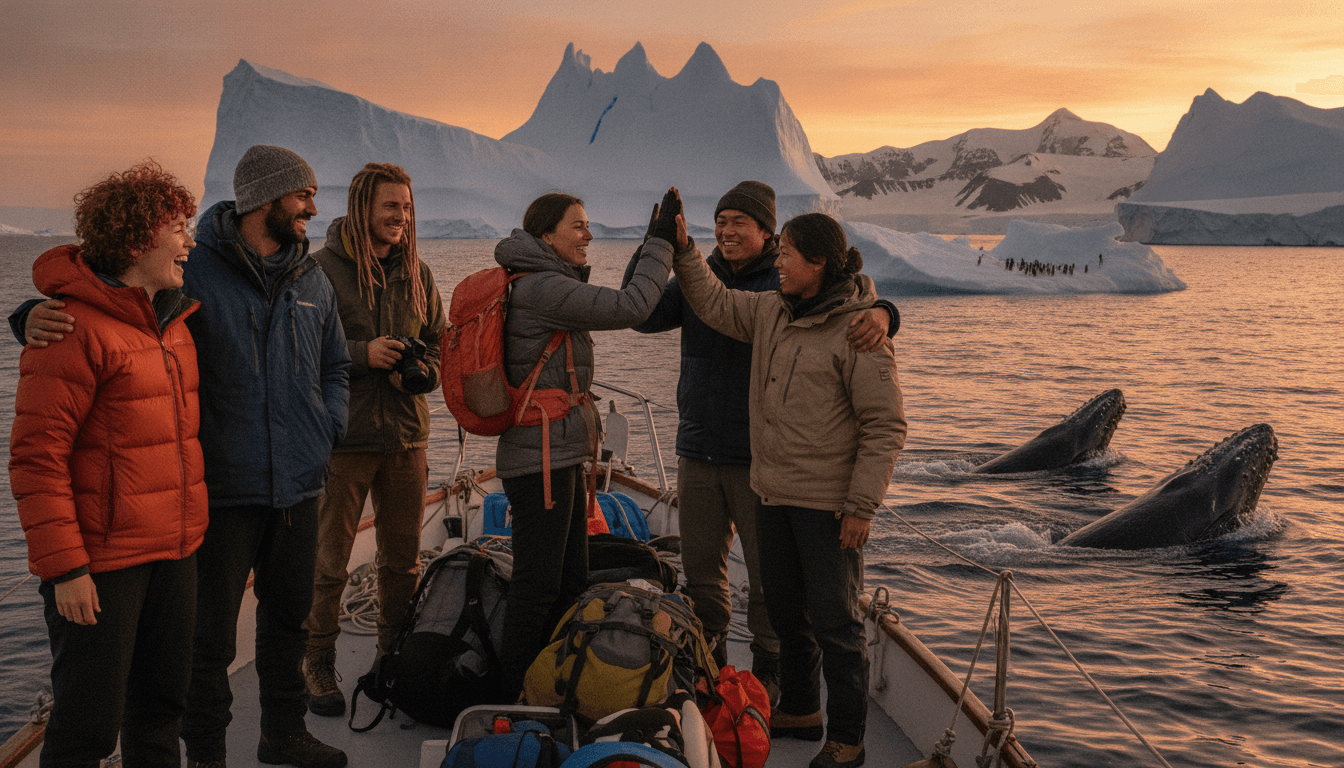
Crossing the Antarctic Circle: Self-Launched Southern Expedition from Ushuaia
14 days · Antarctica & Ushuaia, Argentina
Exodus Adventure Travels charges £7,500
No-markup version: ~£4,200 per person
Estimate only, not a guaranteed price. Always verify costs independently before booking.
This is the self-launched equivalent of Exodus Adventure Travels' "Crossing the Circle: Southern Expedition" — a 14-day Antarctic voyage departing and returning to Ushuaia, Argentina. Antarctica is one destination where true independent travel is not possible: international treaties and safety regulations require all visitors to travel with an IAATO-approved expedition operator aboard a licensed vessel. There is no public ferry, budget cruise, or DIY route to the Antarctic Peninsula. However, this self-launched guide shows you how to book the most affordable IAATO-approved expedition cruise independently (cutting out tour operator mark-ups), plus how to dramatically reduce your pre/post costs in Ushuaia by skipping packaged add-ons, choosing independent accommodation, and booking your own flights. Last-minute ("standby") Antarctic cruise deals booked directly in Ushuaia can cut cabin prices by 30–50%. Estimated costs below reflect a solo traveller booking a budget twin-share cabin on an IAATO expedition cruise independently, with budget accommodation and self-arranged transfers in Ushuaia.
Day-by-day
Arrive in Ushuaia — World's Southernmost City
Ushuaia, Argentina
Fly into Malvinas Argentinas International Airport (USH) — typically routed via Buenos Aires Ezeiza (EZE) on Aerolíneas Argentinas or LATAM. Book your Buenos Aires–Ushuaia leg separately for around £80–120 return. Check into a hostel or budget guesthouse in central Ushuaia. Spend the afternoon exploring the compact city centre on foot: wander the waterfront promenade, browse the colourful shops on San Martín street, and visit a café for Ushuaia's famous handcrafted chocolate. If budget allows, take a short bus or taxi to Tierra del Fuego National Park (entry ~£12) for an afternoon hike in stunning sub-Antarctic forest.
🚌Fly Buenos Aires EZE to Ushuaia USH with Aerolíneas Argentinas or LATAM (~£80–120 return, book in advance). Local taxis from airport to centre ~£8.
🛏Los Cauquenes Hostel or La Casa de Tina Guesthouse, Ushuaia — budget twin/dorm from ~£18–30pp
- →Arrive at Ushuaia Airport (USH) via Buenos Aires
- →Check into hostel/budget guesthouse in central Ushuaia
- →Walk the waterfront Costanera promenade
- →Visit a café for handcrafted local chocolate on Calle San Martín
- →Optional: Day trip to Tierra del Fuego National Park (~£12 entry, shared minibus ~£5)
Embarkation Day — Board Your Expedition Vessel in Ushuaia
Ushuaia → Beagle Channel
Embarkation is typically in the afternoon (check-in 12:00–16:00). Spend the morning exploring Ushuaia independently: visit the Museo del Fin del Mundo (End of the World Museum, ~£5) or do any last-minute gear shopping at the outdoor stores on San Martín. Board your independently booked IAATO expedition vessel at the Ushuaia cruise terminal. The ship departs through the iconic Beagle Channel, named after Darwin's famous voyage. Attend the mandatory lifeboat/safety drill and expedition team orientation. Dinner is included on board from embarkation evening. Key tip: if you haven't already booked, visit the 'last-minute' Antarctic cruise office on the Ushuaia waterfront (near the port) — operators like Quark, Antarpply, and Aurora Expeditions sometimes release unsold cabins at 30–50% off in the days before departure.
🚌Walk or short taxi to Ushuaia cruise terminal. Ship departs through the Beagle Channel.
🛏Cabin aboard IAATO-approved expedition vessel (included in cruise cost)
- →Morning: visit Museo del Fin del Mundo (~£5) or last-minute gear shopping
- →Board expedition vessel at Ushuaia cruise terminal (afternoon)
- →Mandatory lifeboat and safety drill
- →Ship orientation and introduction to expedition team
- →Sail through the Beagle Channel — watch for Magellanic penguins, cormorants, and sea lions
- →Tip: check last-minute cruise offices on the Ushuaia waterfront for standby deals
Drake Passage — Day 1: Seabirds & Swells
Drake Passage
The Drake Passage is one of the most notorious stretches of open ocean in the world — expect swells of 3–8 metres on a typical crossing. Take seasickness medication (cinnarizine or scopolamine patches) before symptoms start; buy these before boarding in Ushuaia. The ship's expedition team will run engaging lectures throughout the day on Antarctic wildlife, glaciology, polar history, and conservation. Spend time on deck spotting seabirds: albatrosses, petrels, and Cape pigeons are commonly seen. The crossing takes roughly 48 hours. All meals are included on board.
🚌Sailing south through the Drake Passage — approximately 800 nautical miles to the Antarctic Peninsula.
🛏Cabin aboard expedition vessel (included in cruise cost)
- →Wildlife spotting from deck: albatrosses, giant petrels, Cape pigeons
- →Attend expedition team lectures on Antarctic wildlife and history
- →Cross the Antarctic Convergence — a biological boundary where cold southern waters meet warmer sub-Antarctic seas
- →Rest and acclimatise — prepare gear for landings ahead
Drake Passage — Day 2: Approaching Antarctica
Drake Passage → Antarctic Convergence
As the ship crosses the Antarctic Convergence (the ecological boundary of Antarctica), the water temperature drops noticeably and iceberg sightings begin. The crew will announce first iceberg sightings — a memorable moment. Continue attending on-board lectures and briefings for tomorrow's first Zodiac landings. The expedition team will brief passengers on IAATO protocols: biosecurity boot-washing procedures, keeping safe distances from wildlife, and group landing logistics. Meals all included on board.
🚌Continuing south through the Drake Passage.
🛏Cabin aboard expedition vessel (included in cruise cost)
- →First iceberg sightings — often visible from Day 4
- →Cross the Antarctic Convergence
- →Attend IAATO biosecurity and landing briefings from expedition team
- →Wildlife spotting: increasing seabird diversity as you near the peninsula
- →On-board lectures: polar history, glaciology, and expedition planning
Antarctic Peninsula — First Landings
Antarctic Peninsula
Welcome to Antarctica — one of the most extraordinary places on Earth. The expedition team will lead Zodiac excursions (inflatable motorised rubber boats) to shore landings at bays and historic sites along the Antarctic Peninsula. Typical landing sites include Neko Harbour, Cuverville Island, or Brown Station. All Zodiac excursions are included in your cruise fare. Visit your first penguin rookery — colonies of Gentoo and Chinstrap penguins are common here — and follow IAATO guidelines: stay 5 metres from penguins (though they may approach you). Watch for leopard seals hauled out on ice floes. All meals included on board.
🚌Zodiac excursions from ship to shore, operated by expedition crew (included).
🛏Cabin aboard expedition vessel (included in cruise cost)
- →First Zodiac excursion to shore landing site on the Antarctic Peninsula
- →Visit a penguin rookery — Gentoo and Chinstrap penguins
- →Zodiac cruising among icebergs and ice floes
- →Wildlife spotting: Weddell seals, crabeater seals, leopard seals
- →Expedition team naturalists lead guided shore visits
- →Photography: dramatic iceberg alley scenery
Antarctic Peninsula — Deep Exploration
Antarctic Peninsula
A full day of Antarctic exploration with multiple Zodiac excursions and shore landings, subject to weather and ice conditions. The ship's captain and expedition leader will select the best available sites each day — flexibility is key. Potential landing sites include Paradise Bay (widely considered one of the most beautiful places on Earth), Danco Island, Petermann Island, or Port Lockroy (a restored British Antarctic base with a working post office and small museum — free to visit). Humpback whale sightings are common in these waters. Optional activities (may cost extra depending on operator): kayaking in Paradise Bay or snowshoeing on a glacier.
🚌Zodiac excursions from ship to shore (included in cruise fare).
🛏Cabin aboard expedition vessel (included in cruise cost)
- →Morning Zodiac excursion: shore landing at Paradise Bay or Petermann Island
- →Visit Port Lockroy British Antarctic Heritage Trust base (free entry, working post office)
- →Afternoon Zodiac cruising: humpback whale and orca spotting
- →Optional extra: sea kayaking in Paradise Bay (~£150–200 if pre-booked with operator)
- →Optional extra: snowshoeing on a glacier (~£50–80 if available)
Antarctic Peninsula — Wildlife & Ice Spectacle
Antarctic Peninsula
Another day of expedition landings along the peninsula. The diversity of Antarctic wildlife is extraordinary — expect encounters with multiple penguin species (Adélie, Chinstrap, Gentoo), various seal species, and potentially orca (killer whales) hunting near ice floes. The expedition team naturalists — typically marine biologists, glaciologists, and polar historians — lead expert commentary at every landing. Evening presentations on board cover topics like climate change, Antarctic treaty governance, and polar exploration history. All meals and Zodiac excursions included.
🚌Zodiac excursions from ship to shore (included in cruise fare).
🛏Cabin aboard expedition vessel (included in cruise cost)
- →Zodiac landing at Adélie penguin colony
- →Wildlife spotting: orca pods, humpback whales, crabeater seals
- →Zodiac cruising through iceberg fields
- →Evening lecture: Antarctic Treaty and conservation
- →Photography workshop with expedition staff (usually free on board)
Heading South — Towards the Antarctic Circle
Antarctic Peninsula → Antarctic Circle
The ship begins sailing south towards 66°33'S — the Antarctic Circle. This is the defining feature of this expedition and the reason it commands a premium over standard peninsula cruises. Ice conditions determine whether the circle can be reached; most departures in January–February succeed. As you sail south, the scenery becomes increasingly dramatic: denser sea ice, larger tabular icebergs, and an eerie stillness. In summer, daylight is almost continuous at these latitudes — expect 20+ hours of light. Wildlife spotting continues from deck: emperor penguin sightings are possible (though rare) at these latitudes.
🚌Ship sailing south towards the Antarctic Circle through sea ice.
🛏Cabin aboard expedition vessel (included in cruise cost)
- →Sail south through increasingly dramatic sea ice scenery
- →Wildlife spotting from deck as the ship navigates ice fields
- →Expedition team briefing on the Antarctic Circle crossing
- →Attend on-board lecture: Antarctic sea ice and climate science
- →Photography: continuous daylight and extraordinary light conditions
Antarctic Circle Crossing — 66°33'S
Antarctic Circle (66°33'S)
Crossing the Antarctic Circle at 66°33' South is the headline moment of this expedition. Very few tourists ever reach this latitude — only around 10,000 people visit Antarctica each season, and only a fraction cross the circle. The expedition team marks the crossing with a celebration on deck, often including a toast with Antarctic-chilled spirits. The scenery here is otherworldly: dense pack ice, enormous tabular icebergs, and an incredible blue-white silence. If conditions permit, the ship may attempt a Zodiac excursion south of the circle itself. Note: crossing depends entirely on ice and weather conditions — the captain's decision is final.
🚌Ship at or beyond the Antarctic Circle; Zodiac excursions if conditions allow.
🛏Cabin aboard expedition vessel (included in cruise cost)
- →Antarctic Circle crossing celebration at 66°33'S (champagne/whisky toast on deck)
- →Photography: extraordinary polar scenery and 24-hour daylight
- →Zodiac excursion south of the Antarctic Circle (if ice conditions permit)
- →Wildlife spotting: snow petrels and Antarctic petrels common at this latitude
- →Collect your Antarctic Circle crossing certificate from the expedition office
Northbound — More Peninsula Landings
Antarctic Peninsula (northbound)
The ship turns north and begins the return journey, but there's no rush — the expedition team continues to seek out the best landing sites and wildlife encounters along the way. Returning northbound often reveals sites not visited on the southbound leg, giving fresh perspectives. The ship may visit different bays and islands on the return route. Humpback whale activity often increases in these areas as the season progresses. The expedition team continues daily lectures and wildlife briefings. Begin thinking about where your Antarctica-inspired travels might take you next.
🚌Ship sailing northbound along the Antarctic Peninsula.
🛏Cabin aboard expedition vessel (included in cruise cost)
- →Zodiac shore landing at a new site on the return route
- →Humpback and minke whale spotting from Zodiacs and deck
- →Seabird identification session with expedition naturalist
- →Attend on-board lecture: polar exploration history (Shackleton, Scott, Amundsen)
- →Evening: expedition team Q&A and farewell drinks planning
Final Antarctic Landings
Antarctic Peninsula (northbound)
Make the most of your final Antarctic landings. The expedition team works hard to maximise time ashore on the last full day near the peninsula. King George Island, with its cluster of international research stations, is a common final landing site — you can visit the Chilean, Uruguayan, and Chinese stations, and a small chapel. Take time to absorb the silence and scale of this extraordinary wilderness. Begin packing and returning any borrowed equipment. The ship will start the Drake Passage crossing overnight or early tomorrow.
🚌Zodiac excursions for final landings; ship begins northbound Drake Passage crossing.
🛏Cabin aboard expedition vessel (included in cruise cost)
- →Final Zodiac shore landing(s) on the Antarctic Peninsula
- →Optional visit to international research stations on King George Island
- →Final wildlife spotting: make the most of your last hours among penguins and seals
- →Pack and return borrowed/rented gear (gumboots etc.) to expedition office
- →Farewell dinner with expedition team on board
Return Drake Passage — Day 1
Drake Passage (northbound)
Two days crossing the Drake Passage back to Ushuaia. The return crossing is often calmer than the outbound leg, or at least more familiar. Use the time to attend final expedition team presentations, browse and purchase images from the ship's photographer, and swap contact details with fellow travellers — Antarctic expeditions forge strong friendships. The ship may pass Cape Horn, the southernmost tip of South America — one of the most dramatic and historically significant capes in the world. Look out for it from deck if weather permits.
🚌Ship sailing north through the Drake Passage.
🛏Cabin aboard expedition vessel (included in cruise cost)
- →Seabird watching: albatrosses often follow the ship closely on the return
- →Final expedition team presentations and slide shows
- →Cape Horn sighting (if the ship passes close enough and weather permits)
- →Browse and purchase expedition photos from ship's photographer
- →Swap contact details with fellow travellers
Return Drake Passage — Day 2 & Re-entry to the World
Drake Passage → Beagle Channel
The final day at sea before returning to Ushuaia. The ship re-enters the Beagle Channel in the afternoon or evening, and the contrast with the Antarctic wilderness is stark — suddenly there are trees, mountains with vegetation, and the lights of a city. The ship typically arrives in Ushuaia the following morning. Final expedition team farewell, certificate presentations, and a recap of the voyage's highlights. Practical tip: book your onward flight from Ushuaia for Day 14 afternoon or later to allow for any delays in disembarkation.
🚌Ship re-entering the Beagle Channel; arrival at Ushuaia overnight or early morning.
🛏Cabin aboard expedition vessel (included in cruise cost)
- →Final day at sea: rest, journal, and reflect on the expedition
- →Re-enter the Beagle Channel — first sight of South American vegetation
- →Official expedition certificate presentation ceremony
- →Captain's farewell dinner on board
- →Practical: confirm onward travel plans from Ushuaia
Disembark in Ushuaia — Onwards to Buenos Aires
Ushuaia, Argentina
Disembarkation is typically 08:00–10:00. Transfer to Ushuaia city centre independently by taxi (~£8) or on foot if staying nearby. If your onward flight is not until the afternoon, store luggage at the port or your hostel and spend a few final hours in Ushuaia: grab a legendary centolla (king crab) lunch at one of the waterfront restaurants (~£15–20), browse the artisan markets, or simply sit by the water and contemplate what you've just witnessed. Fly back to Buenos Aires (EZE or AEP) and connect to your international flight home. Well done — you've visited the end of the world and crossed the Antarctic Circle.
🚌Taxi from cruise terminal to Ushuaia centre (~£8). Fly Ushuaia (USH) to Buenos Aires (AEP/EZE) — ~£80–120 one way.
🛏N/A (disembarkation day — fly onwards to Buenos Aires)
- →Disembark from expedition vessel (08:00–10:00)
- →Farewell breakfast on board before disembarkation
- →Store luggage at the port or hostel if departing later
- →Celebratory centolla (king crab) lunch at a Ushuaia waterfront restaurant (~£15–20)
- →Fly Ushuaia to Buenos Aires with Aerolíneas Argentinas or LATAM (~£80–120)
Self-launched vs. Exodus Adventure Travels
| This itinerary (self-launched) | Exodus Adventure Travels | |
|---|---|---|
| Price per person | ~£4,200 | £7,500 |
| Duration | 14 days | 14 days |
| Who books it | You and your group, direct | Tour operator, guided group |
| Savings | £3,300 per person (44%) | |
Estimate only, not a guaranteed price. Always verify costs independently before booking.
Want to see more Exodus Adventure Travels-style trips? Check them out here.~£4,200
estimated per person
You never pay Travel Crew for this — you pay hostels, transport, and activity providers directly, the same as if you'd booked it all yourself.
This publishes your dates so other travellers can find and join you — no tour operator needed.
Customise with Tour BusterCreated by

Travel Crew
0 trips
Frequently asked questions
How much does Crossing the Antarctic Circle: Self-Launched Southern Expedition from Ushuaia cost?+
Doing it yourself with this self-launched itinerary costs an estimated £4,200 per person for 14 days in Antarctica & Ushuaia, Argentina. This is an AI-generated estimate based on typical budget-traveller prices — actual costs will vary by season and how you book.
Is this cheaper than booking with Exodus Adventure Travels?+
Yes — Exodus Adventure Travels charges around £7,500 per person for a similar tour. Doing the same route independently, using the same standard of accommodation and activities, costs an estimated £4,200 — a saving of roughly £3,300 (44%) per person.
How long is the Antarctica & Ushuaia, Argentina trip?+
This itinerary runs 14 days, covering 14 day-by-day stops through Antarctica & Ushuaia, Argentina.
How do I join this trip?+
You can join an existing open departure using this itinerary if one is scheduled, or launch your own departure with your own dates and invite other travellers to join you — no tour operator required.
Isn't it easier to just use a tour operator?+
Well, yes, a tour operator will book all the individual parts of your travel for you and provide a guide. That's obvious, but doing this has the potential to save the group thousands, which can in turn improve your itinerary substantially or save you huge amounts of money. Also, when you launch a departure, Travel Crew has tools in place to help you book the individual sections of the trip or make it easier for you to do this as a group. Really, you do not need a middle man. If you are more comfortable paying more and using a middle man, then you should certainly do this.
Is it safer to book through a tour operator?+
Arguably, there isn't much difference. A self-launched trip runs on the same principle as a group travel crew: collective responsibility, everyone looking out for each other, the same way it would if a group of friends organised the trip themselves — because that's exactly what's happening. You should always take out travel insurance before you go, self-launched or not; that doesn't change either way. Every open departure is published publicly with real dates and a real trip organiser, so it's never an anonymous arrangement, and our support team is reachable any time you need help, including in an emergency while you're away. Longer-term, we're building direct relationships with ground DMCs in popular destinations, offered as an optional paid add-on for extra on-the-ground support. Ultimately, though, the group is responsible for its own conduct and safety on a self-launched trip, same as on any trip you plan yourself.
What kind of trip is this?+
This is a adventure, wildlife, slow-travel trip through Antarctica & Ushuaia, Argentina, self-launched rather than run by a tour operator — you organise it with a group you find or bring yourself.
Would you like to name the operator, name the trip, or have any suggestions about how to improve this itinerary?
Drop your comment below — if you've done a similar route, tell us what worked, what you'd add, or what you'd skip.
No comments yet — be the first to share your take.
Sign in to leave a comment.